Cat Eye Sunglasses That Lift and Frame Your Features
There is a particular moment in front of a mirror when a pair of sunglasses stops being an accessory and starts doing something to your face. The cheekbones look slightly higher. The jaw looks slightly softer. The eyes seem to…

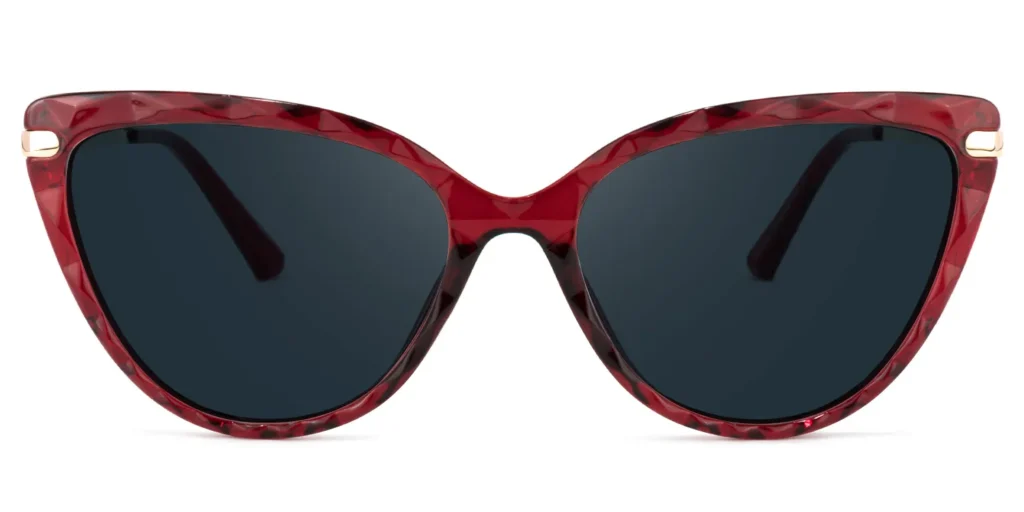
There is a particular moment in front of a mirror when a pair of sunglasses stops being an accessory and starts doing something to your face. The cheekbones look slightly higher. The jaw looks slightly softer. The eyes seem to tilt upward rather than settle downward. Nothing about your bone structure has changed, but the frame has borrowed a few lines from it and quietly redrawn the rest. That effect is not luck, and it is not reserved for people who already photograph well. It comes from geometry, and the upswept frame is one of the most dependable pieces of geometry in eyewear. What follows is a look at how that lift actually works, why the silhouette flatters a wider range of faces than most people expect, and how to choose a version that reads as effortless rather than theatrical. The aim is not to argue that one shape suits everyone. It is to make the mechanics visible, so you can recognise which details are doing the flattering when you try a pair on, instead of standing at a display rack guessing.
The Quiet Geometry Behind an Upswept Frame
Every face carries a set of directional cues. The outer corner of the eye either angles up, sits level, or drifts slightly down. The cheekbone either projects outward or slopes back toward the ear. The jawline either turns a corner or curves through it. When you lay a frame across the middle of a face, you are placing a strong horizontal line over all of that, and the eye reads the frame before it reads the bone underneath.
An upswept frame does something specific with that line. Instead of running flat from temple to temple, the top edge rises as it travels outward and finishes in a raised corner above the outer eye. The result is a visual arrow pointing up and away from the centre of the face. Because we read faces as whole compositions rather than feature by feature, that upward vector pulls the surrounding area with it. The brow looks a touch lifted. The cheekbone looks a touch more defined. The mid-face reads as shorter, which almost always registers as more awake and more youthful.
This is why Cat Eye Sunglasses keep resurfacing across decades that otherwise share very little taste in common. The shape is not surviving on nostalgia alone. It is a lifting device that happened to arrive in the fifties and never stopped being useful, which is a different and much more durable kind of appeal.
Reading Your Own Bone Structure First
Before choosing a version, it helps to know what you are asking the frame to do. The same silhouette can soften, sharpen, widen, or narrow depending on the face it lands on, and the difference comes down to a handful of readable cues.
A rounder face usually benefits from a pronounced sweep and a clearly defined outer corner, because the frame supplies the angle the bone structure does not. The rise suggests cheekbone where there is mostly softness, and the outward point interrupts the curve running from cheek to jaw. A longer or more oval face tends to want the opposite emphasis. Width matters more than height there, so a broader frame with a gentler rise does the balancing work without stretching the face further.
Strong angular features are the case people most often misjudge. The instinct is to avoid anything pointed, on the theory that sharp meets sharp and the result is severe. In practice a softer, rounded interpretation of the sweep works beautifully on a square or defined jaw, because the curve of the lower rim counters the straight lines below while the raised corner echoes them just enough to look deliberate rather than accidental. A face that is wider at the brow and tapers to a narrow chin is generally happiest with a modest lift and a frame that does not reach far past the temples, since extra width across the top exaggerates the taper instead of settling it.
The useful habit is to stop asking whether the shape suits you and start asking what it is adding. If your face already carries a lot of angle, you want the frame to bring curve. If it carries a lot of curve, you want the frame to bring structure. The silhouette can do either, which is precisely why it has such a long reach.

Where the Frame Sits, Not Just How Big It Is
Most disappointing fittings are not a shape problem. They are a placement problem. A frame can be the right silhouette in the right proportion and still fall flat because it sits a few millimetres off where it should. Three relationships decide almost everything.
- The raised corner should land above and slightly outside the outer corner of your eye. Too far inward and the lift crowds the eye; too far outward and the point stops connecting to your features at all.
- The top rim should follow the line of your brow without covering it. Your brows are already doing expressive work, and a frame that hides them borrows the drama it was meant to add.
- The widest point of the frame should sit near the widest part of your face, so the outward sweep finishes in line with your bone structure rather than floating past it.
The bridge deserves attention too, because it controls height. A frame that slides low drops the whole geometry and turns an upward line into a level one, which is the fastest way to lose the effect entirely. If a pair looks right the moment you put it on and wrong ten minutes later, the shape was never the issue.
Colour and Finish Change the Reading
Two frames with identical outlines can produce noticeably different results depending on how they are finished. A solid dark acetate reads as a firm graphic line, which emphasises the sweep and delivers the strongest lift. That is what you want when the point of the frame is contrast and definition. A translucent or lightly tinted acetate softens the same outline, letting skin tone show through the material so the shape suggests lift rather than announcing it. On a face with delicate features, the softer treatment often flatters more, because a heavy line can overwhelm what it was meant to frame.
Thickness follows similar logic. A slimmer rim keeps the geometry legible while staying quiet, and it tends to age well in the sense that it looks current across more than one season. A bolder rim commits harder and rewards confidence. Brands that work across the range, ZENOTTIC among them, usually offer the same underlying silhouette in several weights for exactly this reason, since the outline is only half of what a wearer actually sees.
Wearing the Shape Without the Costume
The lingering worry about an upswept frame is that it will look like a reference to something rather than simply like eyewear. That worry is reasonable, and it has a straightforward answer: let one element carry the retro signal and keep the rest contemporary. If the sweep is dramatic, keep the colour restrained and the rim slim. If the colour is bold, pull the sweep back toward subtle. Trouble arrives when every variable is turned up at once, because that combination reads as an outfit built around the glasses instead of glasses that belong to a face.
It also helps to think about the settings where the frame will actually appear. A pair that looks striking in a mirror under shop lighting may feel like too much at a school pickup or across a work lunch, while a softer interpretation carries through both without demanding a decision each morning. If you want one pair rather than a rotation, choose the version you would reach for on an ordinary Tuesday and let the more emphatic silhouette be the second one you buy, not the first.
Finally, give any new shape a few days before judging it. Unfamiliarity is easy to mistake for unflattering, and an upswept line is genuinely different from the neutral frames most people default to. Wear it outside, catch your reflection when you are not looking for it, and see whether your eye keeps returning to the frame or to your face. The right pair moves attention toward you. That is the whole test, and it is a more honest one than a mirror in a well-lit shop.
Lines That Do the Flattering for You
The appeal of an upswept frame comes down to something quite simple. It draws an upward line where a face is naturally inclined to settle downward, and everything nearby follows that line. Cheekbones read higher, the mid-face reads shorter, and the eyes gain a subtle tilt that no amount of careful styling can manufacture on its own. Getting the effect is less about identifying your face shape from a chart and more about noticing what the frame is adding: curve where you have angle, structure where you have softness. Once that is clear, the practical decisions become easier. Check that the raised corner sits above the outer eye, that the top rim respects your brow, and that the frame holds its position through an ordinary day. Match the intensity of the sweep to the intensity of the colour rather than pushing both. Do that, and the shape stops being a period reference and becomes a piece of geometry that quietly works in your favour, which is the most any accessory can reasonably promise.