Vintage Emerald Rings: Character, Craftsmanship, and Care
When assessing the quality of an antique emerald and diamond ring, it’s important to examine the condition of the emerald first. The hallmark of emeralds is their green colour, but there are subtle differences in colour from stone to stone.…

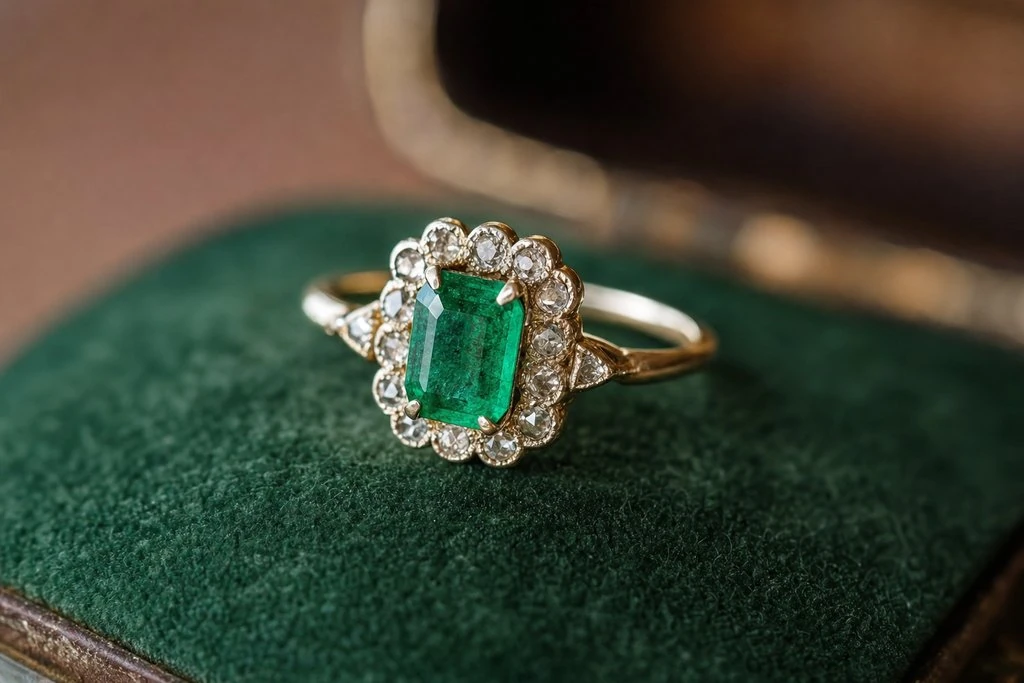
When assessing the quality of an antique emerald and diamond ring, it’s important to examine the condition of the emerald first. The hallmark of emeralds is their green colour, but there are subtle differences in colour from stone to stone. Some emeralds will have deeper, more saturated colouration, others will be lighter, and in certain lighting conditions you may notice slight hints of yellow or blue. When choosing an emerald, look for lively colours instead of ones that seem drab or flat.
Tiny internal lines, wisps or patterns are part of the nature of this gemstone: All emeralds will exhibit some inclusions. However, it’s important to check whether any of these inclusions extend to the surface of the stone or if there are a large number of inclusions making the stone look fractured. Examine the emerald closely, but also step back and look at the ring from different angles. Make sure that you like the colour of the emerald when you look at the ring straight on and from an angle, and in bright and dimmer lighting.
Emeralds are usually set with diamonds because the colour contrast, extra sparkle and visual interest are central to the appeal of vintage emerald rings, although some people prefer a single-stone setting. Antique emerald and diamond rings are often beautiful examples of an artisan’s skill, and whilst it’s unlikely that everything will be completely uniform, well-crafted antique emerald and diamond rings will have well-balanced proportions and a flattering appearance on the hand. Make sure that the emerald is set securely and that the ring will be comfortable to wear.
What Defines a Well-Balanced Ring?
When choosing an antique emerald and diamond ring, consider:
The balance of emerald and diamond
The shape of the emerald and setting
How high the ring sits on the finger
How crisp or worn the detail is
Whether there is a lot of negative space
Settings, Sparkle, and Everyday Wear
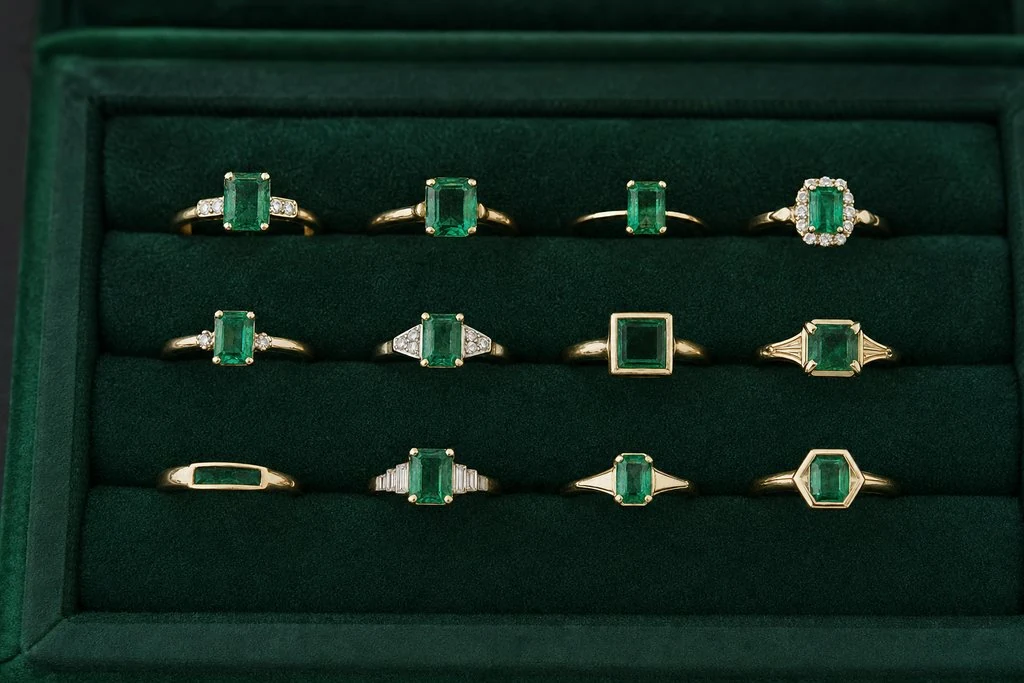
Antique emerald and diamond rings can be set in a number of different ways. Some have a single emerald and diamond centre stone with a halo of diamonds around it, others may be set with floral or cluster designs, marquise or navette shapes, or rows of emeralds and diamonds alternating. Rings with very elaborate settings can be gorgeous, but for day-to-day wear, choose something with a lower profile so that it’s less likely to catch on things.
Antique rings will usually show some signs of wear and use, including softened detail, signs of previous resizing, and worn edges, but it’s important to check that the claws are in good order, especially as emeralds are more vulnerable to chipping than diamonds. Thin metal or worn claws will need to be strengthened, and it’s worth checking whether the emerald is set high enough to protect the corners from knocks.
Of course, if you’re only going to wear your emerald and diamond ring on special occasions, you may not need to worry so much about this, but if you’re looking for a ring that you’ll wear often, choose one where the emerald is well protected so that you can enjoy it without worrying.
Diamonds, as you can find here, add sparkle to antique emerald rings, but unlike modern stones, antique diamonds can have irregular facets and won’t necessarily be perfectly matched. This can look beautiful and give the ring extra character, especially if they’re set so that the diamonds as a whole look well balanced. The colour of the metal can enhance the sparkle of the diamonds, where white metals can make diamonds look whiter, and give a crisp contrast with the green emerald. Warmer tones can look very romantic, and it’s not unusual for antique rings to be made with different metals for the band and setting.
Emeralds are durable, but they’re best kept away from knocks and harsh chemicals, so think practically about whether you’ll be happy to take the ring off for gardening or the gym. Make sure the ring feels comfortable and doesn’t dig in or get caught on other rings.
If you’re likely to want to have the ring resized in the future, check that this can be done sensitively without compromising the setting or destroying any of the original detail. Ideally, give yourself at least a fortnight to decide whether you really like the ring, seeing how it looks and feels on your hand in different situations and lighting, and making sure it goes well with the rest of your jewellery and suits your wardrobe.
Buying for Antique Character
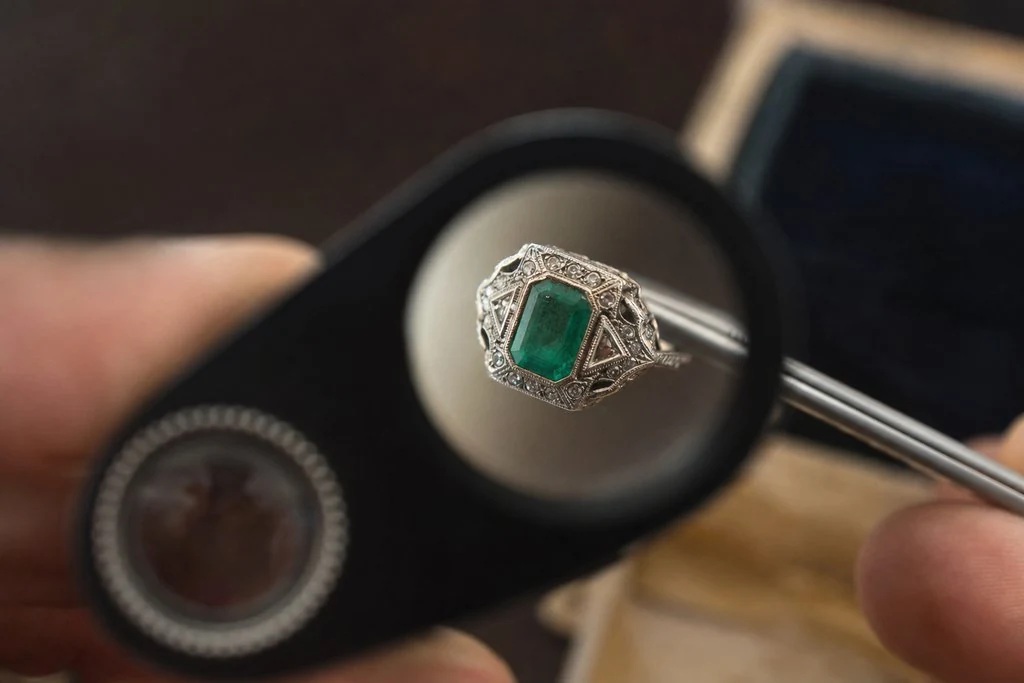
When buying an antique emerald and diamond ring, it’s worth asking the jeweller some questions to get a clear idea of what kind of care the ring will need and to make sure that there’s nothing to put you off wearing it regularly. It’s good if antique jewellery has been well looked after, but previous resizing or other alterations aren’t necessarily anything to be concerned about as long as you’re aware of them and happy with the results. Some questions to ask might include:
How secure are the emerald and diamonds?
Are there any chips, cracks or other noticeable wear?
Has the ring been resized, or have any of the diamonds been replaced?
Would it be comfortable to wear regularly?
Are there any alterations or strengthening that you’d recommend before wearing it regularly?
Any issues that you or your jeweller spot, however minor, should be sorted out before you start wearing the ring regularly.
Antique emerald and diamond rings have character, whether through unusual emerald shapes, softly worn detail, or an asymmetric diamond cluster, so don’t look for perfection; instead, choose a ring where all the elements work well together. Check the condition of the ring carefully and note down any alterations you may want to have done.