At the heart of this conversation is a growing debate: should families stick with traditional bikes, or is it time to embrace electric tricycle cars as a safer, more practical alternative? For parents, caregivers, and anyone responsible for transporting loved ones of varying ages and abilities, the stakes are simply too high to leave this question unanswered.
This article is written for families actively seeking transportation solutions that don’t compromise on stability, control, or peace of mind. We’ll compare electric tricycle cars and traditional bikes across critical safety dimensions, explore what makes a family-friendly electric bike truly reliable, and walk you through a practical guide to making the right choice. From essential safety features to customer support considerations, everything you need to ride confidently as a family starts here.
The Evolution of Family Transportation: From Traditional Bikes to Electric Trikes
For generations, the traditional bicycle represented freedom, fitness, and affordable transportation. Families relied on two-wheelers for everything from school runs to weekend rides, accepting the inherent balancing act as simply part of cycling life. But as family needs grow more complex — aging grandparents joining outings, young children needing secure transport, and suburban distances stretching further — the limitations of traditional bikes have become harder to ignore.
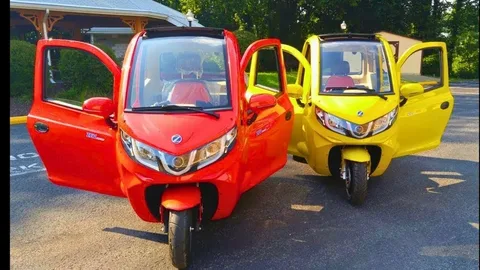
 Enter the electric tricycle car: a modern reimagining of personal transport that blends the accessibility of cycling with the stability and power of motorized assistance. Over the past decade, electric trikes have shifted from niche mobility aids to mainstream family vehicles, appearing in school pickup zones, park pathways, and neighborhood streets worldwide. Their three-wheel design eliminates the constant balancing demand that makes traditional bikes intimidating for older riders and younger passengers alike.
 What’s driving this transition isn’t just novelty — it’s practicality. Electric trikes offer pedal-assist technology that adapts to the rider’s effort, making hills manageable and longer distances achievable without exhaustion. Bike performance has evolved dramatically, with modern electric options delivering consistent speed control, responsive handling, and cargo capacity that traditional bikes simply can’t match for family use.
Traditional bikes remain valuable for solo riders and sport cycling, but their design was never optimized for transporting multiple family members across varied terrain. The growing popularity of electric trikes reflects a broader recognition that safe, easy-to-ride bikes for all ages require more than two wheels and good intentions. Families today are choosing solutions engineered around their real-world needs — and electric tricycle cars are increasingly answering that call.
Safety First: How Electric Tricycle Cars Outperform Traditional Bikes
When a family’s safety is on the line, the engineering behind their chosen vehicle matters enormously. Traditional bikes demand constant balance from the rider — a skill that takes years to develop and can deteriorate with age or fatigue. Electric tricycle cars sidestep this challenge entirely through their three-wheel configuration, which distributes weight across a stable base and eliminates the tipping risk that makes conventional cycling genuinely dangerous for mixed-age family groups. The result is a fundamentally different riding experience, one where confidence replaces anxiety from the very first outing.
Key Safety Features of Electric Tricycle Cars
The most immediate safety advantage of an electric tricycle car is its low center of gravity. With two rear wheels and a wider chassis, the vehicle stays planted even during slow-speed maneuvers or sudden stops — exactly the scenarios where traditional bikes most commonly tip. Assisted braking systems, standard on quality electric trikes, allow riders to slow down progressively without the front-wheel lockup risk common to two-wheelers. For elderly riders managing reduced grip strength, this feature alone is transformative. Enclosed or semi-enclosed cargo areas keep children and belongings secured rather than balanced precariously on a rear rack. Pedal-assist motors further enhance safety by preventing the sudden lurching or stalling that can destabilize a rider mid-journey, ensuring smooth, predictable movement across varied terrain.

Safety Challenges with Traditional Bikes for Families
Traditional bikes present a specific set of risks that become amplified in family settings. Mounting and dismounting remains a genuine hazard for older adults and shorter riders, with many falls occurring before the journey even begins. Carrying children on standard bike seats raises the center of gravity significantly, making the whole system unstable at low speeds or during tight turns. Storage solutions on traditional bikes — panniers, front baskets, rear racks — shift weight unpredictably and can interfere with steering. Perhaps most critically, a tired or distracted rider on a two-wheeler has almost no margin for error. For families who need dependable, repeatable safety rather than skill-dependent cycling, these limitations represent real daily risks.
Key Considerations for Choosing Family-Friendly Electric Bikes
Selecting the right electric bike for family use isn’t simply about picking the most feature-rich model — it’s about matching the vehicle’s capabilities to your family’s specific daily demands. Factors like rider age range, typical journey distance, local terrain, and cargo needs all shape what “family-friendly” actually means in practice. Rushing this decision often leads to purchasing a bike that performs well in showroom conditions but falls short when a grandparent needs to ride it independently or when two children need to be transported safely to school.
Evaluating Bike Performance and Reliability
Motor power and battery life are the two performance pillars that determine whether an electric trike can genuinely serve a family over the long term. A motor with sufficient torque handles inclines without straining, which matters enormously when a rider is carrying passengers or cargo uphill. Battery range should comfortably exceed your typical daily distance — running out of power mid-journey with children on board is not just inconvenient but potentially dangerous. ESKUTE electric bikes illustrate what strong performance looks like in practice: consistent pedal-assist response, dependable battery management, and durable frame construction that holds up to repeated family use across varied surfaces. Beyond raw specifications, durability under real-world conditions — wet roads, frequent starts and stops, varying rider weights — is what separates a reliable family vehicle from one that requires constant attention.
The Role of Customer Support in Family Safety
A family’s safety doesn’t end at the point of purchase — it extends through every maintenance cycle, every mechanical question, and every unexpected issue that arises over years of use. Warranty coverage signals a manufacturer’s confidence in their product, but responsive after-sales support is what actually protects families when problems occur. Look for brands that offer clear maintenance guidance, accessible spare parts, and knowledgeable support teams. ESKUTE backs their electric bikes with customer service designed to keep riders on the road safely rather than waiting weeks for unresolved issues. Reading verified customer reviews specifically about post-purchase support reveals far more about long-term safety reliability than any product specification sheet ever could.
Practical Solutions: Steps to Ensure Safe and Stable Rides for All Ages
Knowing that electric tricycle cars offer safety advantages over traditional bikes is only half the equation. Translating that knowledge into a confident, well-suited purchase — and then maintaining safe riding habits over time — requires a structured approach. Families who invest time upfront in assessing their actual needs and testing real options consistently report greater satisfaction and fewer safety incidents than those who purchase based on specifications alone.
Step-by-Step Guide to Choosing the Right Electric Tricycle Car
Start by mapping your family’s specific profile: how many riders will use the vehicle, what ages and physical abilities are involved, how far you typically travel, and what terrain you’ll encounter most often. A family transporting young children through hilly suburban streets has fundamentally different requirements than one making flat urban errands with an elderly grandparent. Once you have that picture clearly defined, compare stability features across shortlisted models — prioritize wheelbase width, braking responsiveness, and cargo securing systems over cosmetic features. From there, arrange test rides rather than relying solely on online research. Doing so reveals how the vehicle handles real-world conditions with actual family members aboard. Before finalizing any purchase, search specifically for verified customer reviews addressing after-sales support, warranty claims, and long-term reliability. These firsthand accounts expose patterns that product pages never will. With all that information gathered, you’re positioned to make a decision grounded in evidence rather than marketing.
Implementing Safety Measures for Daily Use
Purchasing the right electric tricycle car establishes a strong foundation, but consistent daily habits are what sustain family safety over months and years. Helmets remain non-negotiable for every rider regardless of speed or distance — this applies equally to children, adults, and elderly family members. Schedule routine maintenance checks covering tire pressure, brake function, battery connections, and frame integrity every few weeks, or more frequently with heavy use. Introduce new riders — particularly older adults or young teenagers — to the vehicle gradually, starting with low-traffic areas before progressing to busier routes. Familiarizing every regular rider with the pedal-assist settings and braking behavior specific to your model prevents the hesitation that causes accidents. Keep cargo loads within the manufacturer’s recommended limits and distribute weight evenly to preserve the stability that makes electric trikes so reliable in the first place.
Choosing the Safer Path for Your Family’s Daily Rides
The comparison between electric tricycle cars and traditional bikes ultimately comes down to one question: what does your family actually need from a daily transportation solution? Traditional bikes carry a rich legacy and remain excellent for solo riders and recreational sport, but their design simply wasn’t built around the complex demands of mixed-age family travel. Electric tricycle cars, with their inherent stability, assisted braking, and secure cargo capacity, address the real-world safety gaps that two-wheelers leave exposed.
Stability and ease of use aren’t optional extras for families — they’re the foundation on which every safe journey depends. Whether you’re transporting young children to school, supporting an elderly family member’s independence, or simply seeking a vehicle that every household member can ride confidently, the three-wheel advantage of electric trikes delivers measurable, practical benefits that accumulate with every outing.
Making an informed choice means evaluating performance, reliability, and after-sales support alongside safety features — not treating any single factor in isolation. Brands like ESKUTE demonstrate that strong engineering and responsive customer care can coexist, giving families the long-term confidence they deserve. Prioritizing safety in your transportation decisions isn’t overcautious — it’s the clearest investment you can make in your family’s daily wellbeing. Start with the right vehicle, build consistent safety habits, and every ride becomes one less thing to worry about.