Why High-Precision Tools are Essential for Modern Home Repair
Home repair has fundamentally changed over the past decade. Where once you might have spent a weekend replacing cabinet hinges or tightening loose doorknobs, today’s projects increasingly involve circuit boards, micro-connectors, and screws smaller than a grain of rice. The average household now contains dozens of repairable electronics—wireless earbuds, tablets, smart home hubs, and robotic vacuums—each built with components that demand surgical-level care during disassembly. Standard tools fall short in this environment. A conventional screwdriver lacks the torque control needed to seat a 1.5mm screw without cracking a plastic housing, and generic pliers can easily sever a fragile flex cable. This is where high-precision tools prove their worth as an essential home repair tool category. They deliver measurable accuracy, often within fractions of a Newton-meter of torque, allowing you to apply exactly the force each fastener requires. The result is fewer stripped screws, less component damage, and repairs completed in half the time. Beyond electronics, these tools excel in eyeglass adjustment, watch battery replacement, and hobby model assembly—any high-precision task where control matters more than brute strength. Investing in precision isn’t about luxury; it’s about matching your capabilities to the complexity of the objects you own.
Choosing the Perfect Precision Electric Screwdriver for Electronics
Selecting the right precision electric screwdriver can feel overwhelming given the dozens of options now available, but narrowing your choice becomes straightforward once you map your typical projects to a few critical specifications. Start by considering the range of devices you repair most frequently. Smartphone and tablet work demands ultra-fine torque control in the 0.05 to 0.5 Nm range, while laptop upgrades and game console teardowns often require slightly higher output up to 1.0 Nm. If your projects span both categories, prioritize a model with a wide adjustable torque range rather than one optimized for a single application.
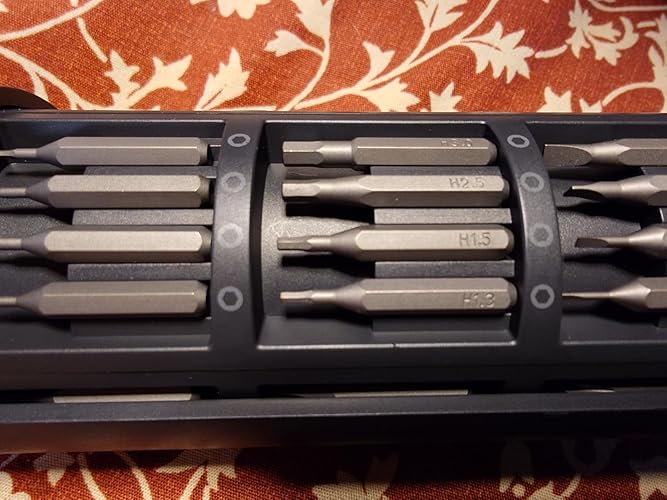 Bit compatibility is your next decision point. Look for screwdrivers that accept standard 4mm hex bits, as this opens access to hundreds of aftermarket bit sets covering Pentalobe, Tri-wing, Y-type, and other specialty fasteners found in modern electronics. Some manufacturers use proprietary bit systems that limit your options, so verify compatibility before purchasing. Ergonomics matter more than most buyers realize—you’ll often hold the tool in a pen-like grip for extended periods during intricate board work, so a slim barrel diameter and balanced weight distribution reduce hand fatigue significantly. Finally, evaluate the power source: built-in lithium-ion batteries offer convenience and consistent power delivery, while models with USB-C charging integrate seamlessly into a desk workflow without requiring dedicated charger cables.
Key Features to Look For in a Precision Electric Screwdriver
Adjustable speed control ranks among the most important features for electronics work, allowing you to start screws slowly to avoid cross-threading and then accelerate once they’re properly seated. An integrated LED light positioned near the bit tip illuminates recessed screw wells inside phone chassis and laptop bays where ambient light can’t reach. Battery life should comfortably exceed your longest typical repair session—look for models offering at least 90 minutes of continuous use or enough charge to drive several hundred screws. Build quality directly impacts longevity; an aluminum alloy housing resists drops better than plastic and dissipates motor heat more effectively. For smartphone repairs, a magnetized bit holder prevents tiny screws from falling into component cavities, while a clutch mechanism that disengages at your preset torque value protects fragile plastic standoffs from cracking.
Top Precision Electric Screwdriver Reviews
The Xiaomi Mi Electric Precision Screwdriver has earned a strong reputation among home repair enthusiasts for its whisper-quiet operation and intuitive one-button speed control. Its slim aluminum body feels natural in a pen grip, and the included S2 steel bits cover most consumer electronics fasteners. The main drawback is a relatively modest torque ceiling that may struggle with corroded or thread-locked screws in older devices. User feedback consistently praises its battery longevity and USB-C charging convenience.
For those tackling heavier-duty electronics work, the iFixit Mako Driver paired with a powered handle offers exceptional bit variety—64 precision bits covering virtually every fastener in laptops, consoles, and smart home devices. The modular approach lets you start manual and upgrade to electric as your needs grow. Some users note the powered handle is slightly bulkier than dedicated electric screwdrivers, but the trade-off in versatility is substantial.
The Wowstick 1F+ targets budget-conscious makers who still want electric convenience. Its dual-direction operation and lightweight body make it ideal for quick fixes on eyeglasses, watches, and small electronics. While it lacks the torque range of pricier competitors, it delivers solid value for light-duty precision tasks and ships with enough bits to handle most household gadgets without supplemental purchases.
Smart Toolkits: The Future of Gadget Repair and Assembly
The concept of a toolkit has evolved far beyond a simple box of screwdrivers and wrenches. Today’s smart toolkits represent a convergence of traditional repair capability and digital intelligence, designed specifically for the maker generation that builds, modifies, and repairs increasingly complex devices. These kits address a fundamental frustration: the scattered, disorganized approach most people take when assembling tools for electronics work. Rather than accumulating random bits and pieces over years, a smart toolkit provides a curated, interconnected system where every component serves a purpose and integrates with the others.
What Makes a Toolkit “Smart” and Why It Matters
A smart toolkit distinguishes itself from traditional sets through three defining characteristics: digital interfaces that guide repairs, modular components that adapt to different project types, and connectivity features that link physical tools to software resources. Some kits include companion apps that identify screws via camera recognition and recommend the correct bit, while others feature magnetized sorting trays with labeled compartments that correspond to step-by-step teardown guides. This level of organization eliminates the common problem of losing tiny fasteners mid-repair or reassembling a device with leftover screws. Traditional toolkits offer static collections—you get what’s in the box regardless of relevance. Smart toolkits, by contrast, prioritize versatility and expandability. Many use a base platform that accepts add-on modules for soldering, measuring, or prying, so your investment grows alongside your skills. For complex projects like 3D printer calibration or robotics assembly, this modularity means carrying one compact case instead of juggling multiple toolboxes. The enhanced functionality translates directly into faster project completion and fewer mistakes, particularly for gadgets for makers that involve multi-step assembly processes with dozens of unique fastener types.
Best Smart Toolkit Options on the Market
The iFixit Pro Tech Toolkit stands as the benchmark for electronics repair, combining over 80 precision tools in a roll-up case with magnetic closure strips that keep everything visible and accessible. Its included anti-static wrist strap, suction cups, and spudger set address the full spectrum of device teardown needs, from prying open glued tablet screens to disconnecting battery cables safely. The companion repair guide database, accessible through iFixit’s platform, transforms this from a passive tool collection into an active repair system. Users consistently highlight how the organized layout reduces time spent searching for the right tool mid-project.
For makers focused on robotics and 3D printing, the Creality toolkit bundles hex keys, nozzle wrenches, and calibration tools specific to additive manufacturing workflows. Its compact form factor fits beside a printer without consuming workspace, and the included digital calipers bring measurement precision that generic kits lack. The trade-off is narrower applicability—this kit excels in its niche but won’t cover smartphone repairs.
The JAKEMY JM-8172 targets users who want breadth across both electronics and maker projects. With 73 magnetic bits, flexible shaft extensions, and an ESD-safe handle, it bridges the gap between dedicated electronics repair and general precision work. Its tiered storage case keeps bits organized by type, and the magnetizer/demagnetizer block lets you toggle screw retention on demand. Choosing between these options comes down to matching your primary project type: select the iFixit for consumer electronics, the Creality for fabrication work, or the JAKEMY for a versatile all-rounder that handles both reasonably well.
Maximizing Your Projects with Gadgets for Makers and High-Precision Tasks
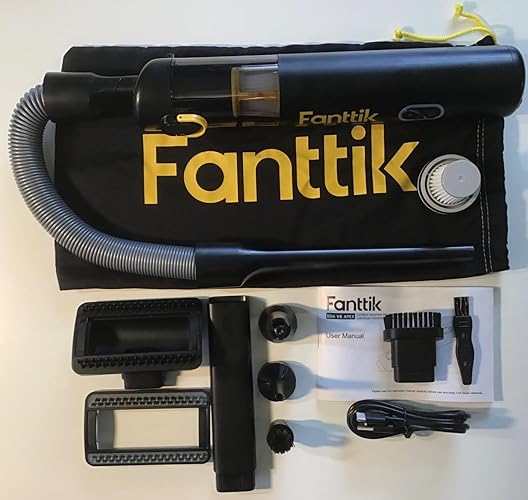
With the right precision tools and smart toolkits in hand, tackling complex maker projects becomes a structured, repeatable process rather than a gamble. Consider drone assembly: start by organizing all fasteners by size using a magnetic sorting tray, then set your precision electric screwdriver to the lowest torque setting for securing the flight controller board—typically requiring no more than 0.15 Nm to avoid cracking the PCB mounting points. Increase torque incrementally when attaching motor mounts to the frame arms, where vibration resistance demands tighter fastening. For automotive electronics work—such as installing a dash cam or replacing a car’s infotainment panel—brands like Fanttik offer precision tools that bridge the gap between household electronics repair and vehicle maintenance, where controlled torque is equally critical for delicate connectors. For gaming console repairs, begin by consulting your smart toolkit’s companion app to identify the exact security bit needed for the outer shell, then follow the guided teardown sequence to avoid disconnecting ribbon cables in the wrong order. When working on high-precision tasks like 3D printer hotend maintenance or mechanical keyboard builds, always calibrate your torque settings against the manufacturer’s specifications before driving any fastener. Maintain your tools by cleaning bit tips with isopropyl alcohol after each session to prevent debris buildup that reduces grip, and store them in their designated compartments to avoid magnetization loss. Safety-wise, always disconnect batteries before working on any powered device, and use an anti-static wrist strap when handling exposed circuit boards. These habits, combined with precision tools and smart toolkits designed for gadgets for makers, transform ambitious projects from risky experiments into reliable, satisfying builds.
Elevate Your DIY Repairs with the Right Precision Tools
The gap between what we own and what we can repair has narrowed dramatically thanks to high-precision tools designed for the modern home. Throughout this guide, we’ve seen how traditional toolboxes fail to meet the demands of miniaturized electronics and complex maker projects, and how purpose-built alternatives solve that mismatch. Choosing the right precision electric screwdriver means understanding your torque requirements, bit compatibility needs, and ergonomic preferences—then selecting a model that covers your most common repair scenarios without compromise. Smart toolkits take this further by integrating digital guidance, modular expandability, and thoughtful organization into systems that grow with your skills and ambitions. Whether you’re swapping a laptop SSD, calibrating a 3D printer, or building a custom drone from components, these tools transform uncertain tinkering into confident, repeatable work. The investment pays for itself quickly—not just in money saved on professional repairs, but in the satisfaction of completing projects cleanly and without collateral damage. Precision and technology have become accessible to every DIY enthusiast willing to upgrade their approach, and the results speak through every perfectly seated screw and flawlessly reassembled device.