GPS employee time clocks offer a fundamentally different approach. By combining precise location verification with digital timekeeping, these systems ensure that every recorded punch corresponds to an actual presence at a designated work site. This article explores how GPS-enabled time tracking works, the features HR managers should prioritize when evaluating solutions, and a practical roadmap for implementation—giving you the tools to eliminate guesswork and bring measurable accuracy to on-site shift management.
The Growing Pains of Managing Fluctuating On-Site Shifts
Industries like construction, field services, healthcare staffing, and facility management share a common operational reality: schedules shift constantly, crews rotate between job sites, and supervisors can’t physically verify every employee’s presence at every location. An electrician dispatched to three different buildings in a single day, a cleaning crew split across commercial properties, or a construction team reassigned mid-week—these scenarios make accurate timekeeping extraordinarily difficult.
 Manual timesheets rely entirely on employee honesty and memory, both of which degrade under pressure. Basic punch clocks solve the memory problem but introduce another vulnerability: they cannot confirm whether the person clocking in is actually at the assigned location or whether a coworker is punching in on their behalf. The result is a cascade of downstream problems—inflated labor hours, disputed paychecks, overtime miscalculations, and compliance violations that expose organizations to Department of Labor audits or union grievances. HR teams end up spending hours each pay period reconciling discrepancies instead of focusing on retention, development, or strategic planning. What these environments demand is a verification layer that ties each clock event to a confirmed physical location, removing ambiguity from the equation entirely.
Understanding the GPS Time Clock: Technology and Core Benefits
A GPS employee time clock is a timekeeping system that captures an employee’s geographic coordinates at the moment they punch in or out, then cross-references that location against pre-defined job site boundaries. Most systems use geofencing—virtual perimeters drawn around authorized work locations—so that a clock event is only accepted when the employee’s device or terminal falls within the approved zone. The workflow is straightforward: an employee opens a mobile app or approaches a site-mounted terminal, initiates their punch, and the system simultaneously records the timestamp and verifies their GPS coordinates. If they’re outside the geofence, the punch is either flagged or rejected entirely.
For HR teams, this creates an automatic audit trail that pairs every time entry with verifiable location data—no manual cross-checking required. Payroll processing becomes faster and more defensible because each record carries geographic proof of presence. Compliance with labor regulations improves since documented location stamps demonstrate that employees worked where and when reported, a critical safeguard during wage-and-hour disputes or audits. Perhaps most importantly, the system removes the adversarial dynamic of policing timesheets. Managers no longer need to question employee honesty, and employees gain protection against false accusations, fostering trust while delivering the accuracy that accurate payroll demands.
Key Features to Evaluate in a GPS Time Clock System
Selecting the right time clock with GPS tracking requires looking beyond basic location tracking. HR managers need a system that addresses multiple pain points simultaneously—identity verification, scheduling complexity, long-term reliability, and adaptability to existing workflows. The following features represent the critical evaluation criteria that separate adequate solutions from ones that genuinely transform workforce management.
Fingerprint Recognition for Fast and Fraud-Proof Clock-In
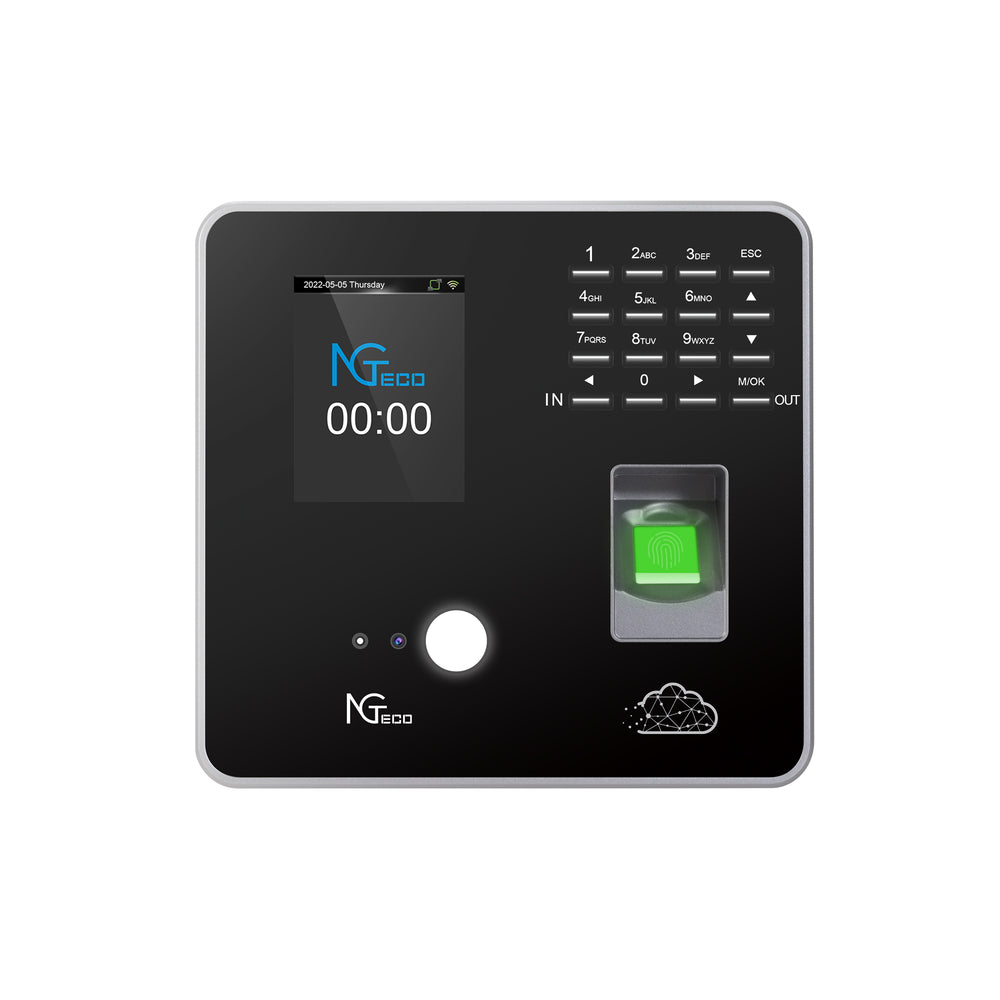
GPS verification confirms where an employee is, but biometric fingerprint recognition confirms who they are. Together, these two layers eliminate buddy punching entirely—no one can clock in for a colleague when the system demands both a physical fingerprint and location match. Hardware providers like NGteco have developed terminals that combine GPS capability with fingerprint scanning, accelerating the clock-in process to under two seconds and reducing bottlenecks at shift changes when dozens of workers arrive simultaneously. For HR managers, this means cleaner data from the very first punch, with zero ambiguity about identity or presence.
Integrated Shift Management for Dynamic Workforces
A GPS time clock becomes exponentially more valuable when it includes built-in shift management capabilities. Look for systems that allow managers to build and modify schedules directly within the platform, approve shift swap requests with a single click, and visualize real-time labor distribution across all active job sites. This integration eliminates the disconnect between scheduling and timekeeping—when an employee clocks in, the system automatically validates their punch against the assigned shift and location, flagging discrepancies instantly rather than days later during payroll reconciliation.
The Critical Role of Technical Support and Warranty
Deploying technology across multiple job sites introduces hardware and connectivity variables that demand responsive vendor support. Evaluate providers based on support channel availability—phone, chat, and email during your operating hours—and average response times for critical issues. Warranty coverage should extend at minimum two years for hardware components, covering replacement rather than just repair. A system that goes offline at a remote site during peak shift hours needs resolution within hours, not days, making vendor reliability as important as the technology itself.
Leveraging Customizable Features for Your Business
No two organizations define job sites, reporting hierarchies, or compliance requirements identically. Prioritize systems offering configurable geofence sizes—a tight radius for a single building versus a broader zone for a sprawling campus—along with custom report templates that match your payroll cycle and audit needs. Integration capability with your existing payroll and HRIS platforms through API connections or direct exports prevents data silos and eliminates redundant manual entry. The system should adapt to your processes rather than forcing operational changes to accommodate software limitations.
Implementation Roadmap: Steps to Deploy GPS Time Clocks
Successful deployment starts with a thorough needs assessment. Document your current pain points—how many hours does payroll reconciliation consume, which sites experience the most discrepancies, and what compliance requirements must the system satisfy? These answers define your selection criteria and establish measurable success benchmarks.
With goals clarified, narrow your vendor shortlist to two or three providers and request pilot programs. Run a controlled test at one or two job sites for at least one full pay cycle, involving both field employees and payroll staff in the evaluation. Their feedback reveals usability issues that demos cannot surface. Once you’ve selected a vendor, configure the system methodically: draw geofences for every active job site, establish scheduling templates, set alert thresholds for flagged punches, and define administrator permissions by role. Employee onboarding should combine brief hands-on training with clear written policies explaining what data is collected, how it’s used, and what happens when a punch falls outside a geofence. Next, integrate the platform with your existing payroll and HRIS systems—test data transfers across two pay cycles before retiring legacy processes. Finally, establish an ongoing review cadence. Monthly audits of flagged punches, quarterly geofence adjustments as projects shift, and regular check-ins with your vendor’s support team ensure the system evolves alongside your operations rather than becoming another outdated tool.
Addressing HR Manager Concerns: ROI and Beyond
The most common hesitation around GPS time clocks centers on cost justification, but the math typically resolves itself quickly. Consider the hours your payroll team spends each cycle chasing discrepancies, the overtime payments triggered by inaccurate records, and the financial exposure from even one successful wage-and-hour claim. Organizations routinely recover their investment within six to nine months through reduced time theft alone—often reclaiming three to five percent of total labor costs that were previously lost to buddy punching or inflated hours. Administrative time savings compound that return as payroll staff shift from detective work to strategic contributions.
Employee privacy concerns deserve transparent handling rather than dismissal. Communicate clearly that GPS data is captured only at the moment of clock-in and clock-out, not as continuous surveillance throughout the workday. Frame the system as mutual protection: employees gain documented proof of their presence and hours, shielding them from disputes or underpayment. Change management succeeds when rollout includes frontline input—invite employees to participate in pilot testing, address questions openly during onboarding sessions, and publish a concise data-use policy that specifies retention periods and access restrictions. When people understand the system protects their paycheck as much as it protects the organization’s budget, resistance typically fades within the first pay cycle.
Achieving Payroll Confidence Through Location-Verified Timekeeping
GPS employee time clocks represent more than an incremental upgrade to traditional timekeeping—they fundamentally resolve the verification gap that has plagued on-site workforce management for decades. By anchoring every clock event to confirmed geographic coordinates, these systems eliminate the guesswork that drives payroll errors, compliance exposure, and administrative waste. When paired with biometric fingerprint recognition, the dual-layer approach closes both the “where” and “who” questions simultaneously, making buddy punching and location fraud functionally impossible.
The additional value of integrated shift management, customizable geofences, and seamless payroll connectivity transforms what could be a single-purpose tool into a comprehensive workforce operations platform. HR managers gain real-time visibility, defensible audit trails, and hours reclaimed from manual reconciliation—time better invested in employee development and organizational strategy. The technology is mature, the implementation path is well-defined, and the return on investment is measurable within months rather than years. If inaccurate timesheets and location uncertainty are consuming your team’s energy, evaluating a GPS time clock system is the most direct step toward operational clarity and payroll confidence you can take today.