In the sections ahead, we’ll explore why family organization matters, what features to prioritize when choosing a digital calendar, the top options available today, and a practical step-by-step guide to getting everything set up. By the end, you’ll know exactly what to look for — and how to finally get your family on the same page.
The Importance of Family Organization with Digital Calendars
Modern families are busier than ever. Between school pickups, extracurricular activities, work deadlines, medical appointments, and social commitments, the average household is managing a scheduling load that would challenge even the most organized person. When coordination breaks down — and it inevitably does with paper planners or scattered reminder apps — the consequences ripple through the entire family. A missed practice, a forgotten permission slip, or a double-booked Saturday afternoon creates stress that nobody needs.
The real problem isn’t that families are disorganized by nature. It’s that traditional tools simply weren’t designed for the complexity of modern household life. A wall calendar can’t send you a reminder. A sticky note doesn’t update in real time when plans change. And a group chat thread buries important dates under a flood of unrelated messages within hours.
 This is exactly where a digital calendar for family earns its place at the center of family life. Rather than scattering information across multiple platforms and people, a well-chosen digital calendar creates a single, accessible hub where every commitment lives. Every family member — from a tech-savvy teenager to a grandparent occasionally joining the schedule — can view, update, and respond to events in real time. Changes sync instantly, reminders arrive automatically, and nothing slips through the cracks. More than a scheduling tool, a digital calendar becomes the quiet backbone of a well-functioning household, reducing forgetfulness and freeing up mental energy for the moments that actually matter.
Key Features to Look for in the Best Digital Calendar for Family
Choosing a digital calendar isn’t just about picking the most popular app. Families have specific needs that generic productivity tools often overlook. The right platform should feel intuitive for a ten-year-old and a grandparent alike, while still offering enough depth to handle a household running in five different directions. Here’s what actually matters.
Core Digital Calendar Functionality: Sync and Accessibility
At its foundation, any family calendar must sync instantly across every device in the household. When your partner updates Saturday’s schedule from their phone at work, you should see that change immediately on your tablet at home — not after a manual refresh, not hours later. Cloud-based storage ensures the calendar is always current and accessible, whether someone’s checking it on a laptop, a smartphone, or a shared home screen. Look for platforms with clean, straightforward interfaces that don’t require a tutorial to navigate, because a tool nobody uses is no tool at all.
Family-Centric Tools: Shared Calendars and Permissions
Shared calendar access is non-negotiable for family use, but the best platforms go further by offering adjustable permissions. You might want your teenager to view and add events but not delete anything. A co-parent might need full editing rights. Some tools let you create separate calendars for different categories — school, work, medical — and share each one selectively. This layered approach keeps everyone informed without sacrificing privacy or creating accidental scheduling conflicts.
Enhanced Visual Reminders: Color-Coded Alerts and Notifications
Color-coding transforms a cluttered calendar into an instantly readable snapshot of your week. Assign each family member their own color, or organize by activity type — blue for school events, green for sports, red for medical appointments. At a glance, anyone can see who has what and when. Pair this with customizable notifications — reminders sent 24 hours before, one hour before, or at whatever interval works for your household — and the chances of a forgotten commitment drop dramatically.
Hardware Integration: Wall-Mounted Calendar vs. Screen Mount Options
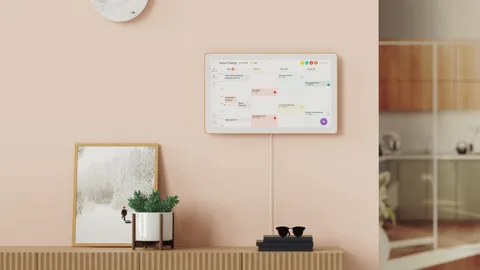
A digital calendar lives on screens, so where those screens live matters. A dedicated wall-mounted display in the kitchen or hallway keeps the family schedule visible without anyone needing to actively check their phone. These permanent setups work beautifully as always-on household hubs. Screen mount options — tablet stands or monitor arms — offer more flexibility, letting you reposition a shared device as needed. Your best choice depends on your home’s layout and how your family naturally moves through shared spaces.
Top Digital Calendar Options for Families
With dozens of calendar apps on the market, narrowing down the best options for family use comes down to how well each platform handles shared access, visual organization, and cross-device compatibility. A few standouts consistently rise to the top when families are the priority.
Google Calendar remains one of the most versatile free options available. Its shared calendar feature lets every family member maintain their own calendar while overlaying everyone’s schedules in a single view. Color-coding is built in, notifications are highly customizable, and it syncs seamlessly across Android, iOS, and desktop browsers. For families already embedded in the Google ecosystem, it’s a natural starting point.
Apple Calendar offers similar functionality for households running iPhones, iPads, and Macs. iCloud syncing keeps everything current across Apple devices, and family sharing integrates directly with the platform. The interface is clean and approachable, though its cross-platform flexibility is more limited compared to Google’s offering.
Cozi Family Organizer was built specifically for households, making it one of the strongest dedicated options. Beyond calendar features, it includes shared shopping lists, meal planning, and a family journal — all in one place. Its color-coded member profiles make it immediately clear whose commitment is whose, and the free version covers most families’ core needs. Platforms like Everblog have also entered the digital calendar space with a focus on household usability, reflecting just how much demand there is for tools designed around real family workflows rather than individual productivity.
For families who want a physical display rather than a phone-dependent solution, smart display devices like Amazon Echo Show or Google Nest Hub can mirror a shared digital calendar on a screen mounted in a common area. These hardware options bring the schedule off the phone and into the heart of the home, making it visible to everyone throughout the day without requiring anyone to actively check an app.
How to Implement a Digital Calendar for Your Family: Step-by-Step Solution
Step 1: Assess Your Family’s Needs and Choose the Right Tool
Before downloading anything, take ten minutes to map out what your household actually needs. A family of four with two school-age kids has different demands than a blended family coordinating across two households. Consider how many people will use the calendar, what types of events you track most often, and whether anyone in the family struggles with technology. If cross-platform compatibility matters — say, one parent uses Android and the other uses iPhone — Google Calendar is a safer bet than Apple Calendar. If you want an all-in-one household hub with lists and meal planning built in, Cozi is worth exploring first.
Step 2: Set Up and Customize with Color-Coded Events and Alerts
Once you’ve chosen your platform, create a shared calendar and invite every family member. Assign each person a distinct color immediately — this single step makes the calendar dramatically easier to read at a glance. Next, create category-based sub-calendars if your platform supports them: one for school, one for sports, one for medical appointments. Then configure notifications thoughtfully. A 24-hour reminder works well for appointments requiring preparation, while a 30-minute alert suits pickups and drop-offs. Resist the urge to set reminders for everything — alert fatigue leads to ignored notifications.
Step 3: Integrate Hardware: Installing Wall-Mounted or Screen Mount Displays
Putting the calendar on a visible shared screen dramatically increases how often your family actually consults it. For a permanent solution, mount a tablet or smart display in the kitchen using a wall-mount bracket, then set it to display your shared calendar in always-on mode. If you prefer flexibility, a countertop stand with an adjustable arm lets you reposition the device as needed. Connect the display to your chosen calendar app, enable auto-refresh, and set the screen timeout to never during daytime hours so the schedule stays visible throughout the day.
Step 4: Establish Family Routines for Maintenance and Review
A calendar only works if everyone uses it consistently. Designate one person as the primary administrator responsible for adding events promptly, but make it clear that all family members share responsibility for checking and updating their own commitments. Build a brief weekly review into an existing routine — Sunday dinner is a natural fit — where everyone confirms the upcoming week’s schedule together. Spend five minutes resolving conflicts before they become Tuesday-evening surprises. Over time, this habit transforms the calendar from a passive tool into an active communication system that keeps your entire household genuinely aligned.
Benefits of Using a Digital Calendar for Family Organization
When a digital calendar becomes a genuine part of daily household life, the benefits extend well beyond simply knowing where everyone needs to be. The most immediate payoff is fewer missed commitments. Automated reminders handle the mental load that previously fell on one overwhelmed parent, so a dentist appointment doesn’t get forgotten because someone had a hectic morning. That reduction in forgetfulness alone can meaningfully lower the low-grade stress that accumulates in busy households.
Improved communication is another tangible gain. When every family member can see the same up-to-date schedule, the endless back-and-forth of “Did you know about this?” and “Nobody told me” largely disappears. A shared digital calendar replaces fragmented group chats and verbal reminders with a single source of truth that anyone can check at any moment. This transparency builds accountability — kids learn to check their own schedules, and partners stay genuinely informed without constant check-ins.
There’s also a broader effect on family harmony that’s easy to underestimate. Scheduling conflicts are resolved before they become arguments. Logistics get handled quietly in the background, which frees up actual family time for connection rather than coordination. Over weeks and months, the household simply runs more smoothly, and that smoother rhythm creates space for the moments that matter most — not because life got less busy, but because the right tool is quietly holding everything together.
The Right Digital Calendar Can Transform Your Family’s Routine
Family scheduling doesn’t have to feel like a second job. The right digital calendar — chosen thoughtfully and set up with your household’s specific rhythms in mind — can quietly transform the way your family moves through each week. From real-time syncing and color-coded visibility to shared permissions and always-on displays, the features covered in this article aren’t luxuries. They’re practical solutions to the very real friction that derails even the most well-intentioned households.
Whether you start with Google Calendar’s flexibility, Cozi’s family-first design, or a wall-mounted display that keeps everyone honest at a glance, the most important step is simply choosing a tool and committing to it together. Set it up, personalize it, build the weekly review habit, and give it a few weeks to become part of your family’s routine. The payoff — fewer missed appointments, less stress, and more mental space for the moments that actually matter — is well worth the initial effort.
Your family’s schedule isn’t going to get simpler. But with the right digital calendar in place, managing it absolutely can.