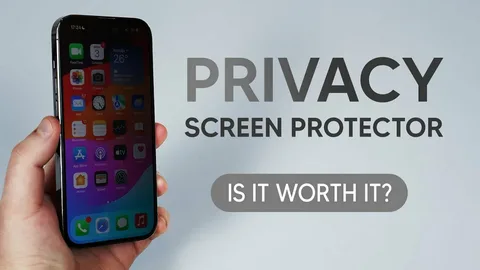
Tech-savvy consumers are increasingly aware that digital privacy isn’t just about strong passwords or encrypted apps — it starts with what others can physically see. Screen protectors have quietly evolved from simple scratch shields into powerful privacy tools that address this concern head-on. Modern options, particularly privacy glass, are engineered to restrict your screen’s visibility to anyone not directly in front of it, effectively blocking prying eyes without compromising your own viewing experience. This article breaks down how specific screen protector types enhance your phone’s privacy, what to look for when choosing one, and how to apply it correctly for maximum effectiveness.
Understanding Screen Protectors and Their Evolution into Privacy Tools
Screen protectors started as humble plastic films designed to do one thing: keep your display free from scratches and minor scuffs. Early adopters slapped them on their devices primarily to preserve resale value or protect against keys and coins rattling around in a pocket. Back then, functionality was straightforward — a thin barrier between your screen and the physical world.
 Over time, manufacturers recognized that users wanted more from that thin layer of material. Tempered glass replaced flimsy film for millions of consumers, offering genuine impact absorption alongside scratch resistance. Anti-glare coatings followed, then blue light filters, and eventually oleophobic treatments to reduce fingerprint smudging. Each iteration reflected a deeper understanding of how people actually use their phones — in bright sunlight, for hours at a stretch, in environments where screen readability and comfort matter.
The most significant leap, however, came when privacy entered the equation. Tech-savvy users began to realize that no encryption or two-factor authentication could stop someone standing two feet away from simply reading their screen. Device protection and data protection, it turned out, were two sides of the same coin. Modern screen protector for phone options now incorporate micro-filter technology that physically restricts the screen’s viewing angle, making your display appear dark or blurred to anyone not positioned directly in front of it. What began as a scratch shield has quietly become a frontline privacy tool.
Exploring Types of Privacy-Enhancing Screen Protectors
Not all privacy screen protectors are built the same way, and understanding what separates them helps you make a smarter purchase. The market currently offers two dominant categories worth knowing: privacy glass with micro-louver technology and tempered guards with integrated privacy layers. Each serves a distinct user profile, and picking the wrong one can mean sacrificing either protection or visual clarity.
Privacy Glass: The Technology Behind Restricted Viewing Angles
Privacy glass works through a principle borrowed from window blinds. Embedded within the glass are microscopic vertical louvers — tiny parallel structures that function like a filter, allowing light to pass straight through but blocking it at wider angles. The result is a screen that looks perfectly clear to you but appears nearly black to anyone viewing from the side. Most privacy glass products restrict visibility to a 30-degree cone on either side of center, meaning a colleague sitting adjacent to you on a plane or a stranger at a coffee shop simply cannot read your display. Brands like MagicJohn have built their privacy glass lines around this exact micro-louver principle, offering angle-restricted protection across a wide range of phone models. For professionals handling sensitive communications, financial data, or confidential documents in public, this technology directly eliminates the risk of visual hacking without requiring any behavioral change on your part.

Tempered Guards with Integrated Privacy Layers
Tempered guards take a different approach by fusing impact-resistant glass with a built-in privacy film during manufacturing. This layered construction means you get genuine drop and crack protection alongside angle-restricted visibility in a single product. Compared to standalone privacy films, tempered guards offer noticeably better screen clarity at direct viewing angles and hold up far longer under daily wear. The tradeoff is a slight reduction in brightness, which most users adjust to quickly by bumping up screen intensity by one or two levels. For anyone who has previously cracked a display and wants comprehensive coverage — both from physical damage and prying eyes — tempered guards represent the most practical all-in-one solution available today.
How to Choose the Right Privacy Screen Protector for Your Phone
Selecting the right privacy screen protector comes down to four practical factors, and getting them right means you won’t end up with a product that frustrates you daily. Start with compatibility — not all protectors are cut for every device, and even minor size mismatches can leave edges exposed or interfere with camera cutouts. Always verify that the product lists your exact phone model before purchasing.
Next, consider the viewing angle restriction. Privacy glass typically comes in two configurations: 30-degree and 45-degree variants. A 30-degree protector offers tighter privacy, making your screen nearly unreadable to anyone not positioned directly in front of it — ideal for frequent travelers or open-plan office workers. A 45-degree option allows slightly wider visibility, which suits users who occasionally share their screen with a trusted colleague without removing the protector entirely.
Material quality is the third deciding factor. Tempered glass outperforms film in virtually every measurable way — it resists shattering, maintains optical clarity longer, and feels closer to the original screen surface under your fingertips. Film-based privacy protectors cost less upfront but tend to peel, yellow, and degrade touch sensitivity over months of use. For daily drivers, tempered privacy glass is the more cost-effective long-term choice.
Finally, look for supplementary features that match your habits. Anti-glare coatings reduce reflections in outdoor settings, while oleophobic treatments keep smudging minimal. If you use your phone for extended periods, a blue light filtering layer adds meaningful eye comfort. Balancing these features against your specific environment ensures your privacy screen protector works as hard as you do.

Step-by-Step Guide to Applying Privacy Screen Protectors Perfectly
Even the best privacy screen protector fails to deliver if it’s applied with bubbles, dust trapped underneath, or misaligned edges. A careful installation process takes less than ten minutes and makes a significant difference in both visual clarity and long-term adhesion. Before you open the packaging, gather what you need: the protector itself, the included cleaning wipes, a microfiber cloth, and a dust removal sticker if provided. Work in a low-dust environment — a bathroom immediately after running a hot shower works surprisingly well, as steam settles airborne particles.
Start by powering off your phone and wiping the screen with the alcohol wipe to remove oils and residue. Follow immediately with the dry microfiber cloth using circular motions. Use the dust removal sticker to lift any remaining particles — even invisible specks cause visible bubbles once the protector is down. Hold the screen up to a light source at an angle to confirm the surface is completely clean before proceeding.
Using Auto-Alignment Kits for Bubble-Free, Precise Installation
Auto-alignment kits have transformed what was once a frustrating guessing game into a repeatable, accurate process. These kits include a rigid frame or tray that snaps around your specific phone model, holding the protector in exact position before it ever touches the screen. To use one, place your cleaned phone inside the alignment tray, peel the backing film from the protector, and lower it into the frame. The tray ensures every edge and cutout lines up perfectly with your camera, speaker, and display borders — no eyeballing required. MagicJohn’s screen protector packages, for instance, include an auto-alignment kit as standard, which takes much of the guesswork out of installation for first-time users.
Once the protector contacts the screen, press gently from the center outward using the included squeegee or your fingertip. This motion pushes air toward the edges rather than trapping it in the middle. Any remaining small bubbles near the edges typically disappear within 24 to 48 hours as the adhesive fully cures. If a larger bubble persists, use the dust removal sticker to lift that corner, reposition, and press again. The alignment kit eliminates the most common installation mistakes — crooked placement and edge gaps — that compromise both the protector’s appearance and its privacy function along the screen’s perimeter.
Beyond Privacy: Additional Protective Benefits of Screen Protectors
Privacy is the headline feature, but it’s far from the only reason to invest in a quality screen protector. The same tempered glass construction that restricts viewing angles also delivers meaningful physical protection that extends your device’s lifespan in practical, everyday ways.
Scratch resistance remains one of the most tangible benefits. Keys, coins, and gritty surfaces constantly threaten your display, and even hairline scratches accumulate into a haze that dulls screen clarity over time. A tempered glass protector absorbs that daily punishment instead, leaving your actual display pristine beneath it. When the protector itself becomes too scratched, replacing it costs a fraction of what a display repair would run.
Impact absorption adds another layer of value. Tempered glass is engineered to distribute the force of a drop across its surface, often cracking itself while keeping the underlying screen intact. For users who have experienced the gut-punch of a shattered display, this sacrificial protection alone justifies the purchase.
Blue light filtering, available in select privacy protectors, addresses a different kind of wear — the cumulative strain on your eyes from extended screen exposure. By reducing the high-energy blue wavelengths your display emits, these protectors make long reading or browsing sessions noticeably more comfortable, particularly in low-light environments before bed.
For tech-savvy consumers who demand comprehensive solutions rather than single-purpose accessories, a privacy screen protector delivers exactly that: one product that simultaneously guards your data, shields your display, and supports your long-term comfort and device health.
Privacy Screen Protectors: A Smart Investment for Your Device and Data
Your smartphone carries more sensitive information than most people keep in their homes — financial accounts, private conversations, work documents, and personal photos. Protecting that data shouldn’t stop at passwords and encryption. As this article has shown, privacy screen protectors, particularly privacy glass and tempered guards with integrated privacy layers, provide a straightforward physical defense against visual hacking by restricting your screen’s visibility to a narrow forward-facing angle.
Choosing the right protector means matching your phone model precisely, selecting the appropriate viewing angle restriction for your environment, and prioritizing tempered glass over film for lasting clarity and durability. Applying it correctly — using a clean surface, a low-dust environment, and an auto-alignment kit — ensures you get the full benefit of the technology without bubbles or misalignment undermining its effectiveness.
The broader value extends beyond privacy alone. Scratch resistance, impact absorption, and optional blue light filtering make a quality privacy screen protector one of the most practical investments you can make for your device. For tech-savvy consumers who want comprehensive protection rather than piecemeal fixes, it delivers on every front — guarding your screen, your data, and your daily comfort in a single, affordable layer.