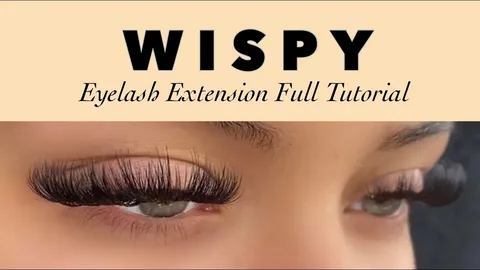
Volume wispy lashes have become one of the most requested styles in the lash industry, and it’s easy to see why. Their signature blend of soft, fluttery texture with dramatic dimension gives clients a look that feels both effortless and glamorous. Unlike uniform volume sets, wispy lashes mimic the natural irregularity of real lashes, creating depth and movement that photographs beautifully and wears even better.
For new lash technicians, however, achieving that coveted feathery finish presents a real challenge. The wispy style demands a careful balance of varied lengths, intentional spacing, and precise fan placement — and when any of these elements go wrong, the result can look clumpy, uneven, or flat. Many beginners struggle with consistency, isolation, and mapping, turning what should be an artistic process into a frustrating one.
This guide is designed to change that. Whether you’re just starting out or looking to refine your technique, you’ll find actionable solutions to the most common volume wispy lash mistakes. From fan creation and isolation to adhesive selection and aftercare, every recommendation here prioritizes simplicity, reliability, and results you can confidently deliver to your clients.
Understanding Volume Wispy Lashes: The Foundation for Success
Volume wispy lashes differ from classic or standard volume sets in one fundamental way: intentional variation. Where a classic set applies one extension per natural lash at a uniform length, and a traditional volume set layers consistent fans across the lash line, wispy lashes break that symmetry on purpose. The result is a textured, staggered finish that mimics how natural lashes actually grow — some longer, some shorter, with subtle gaps that create dimension and movement.
The design principle behind this style relies on alternating fan sizes and extension lengths along the lash line. Shorter, closed fans form a soft, dense base, while longer spikes — often single extensions or narrow fans — are placed at strategic intervals to create those signature wispy peaks. This interplay between density and openness is what gives the style its feathery, lived-in quality.
Getting the right materials matters just as much as technique. For most wispy sets, a C or D curl works well, offering lift without an overly dramatic curve. Diameter selection is equally important: thinner extensions in the 0.03 to 0.07mm range keep fans lightweight and prevent the lash line from looking heavy. Length variation is the backbone of the wispy effect, so working with a range — typically 8mm to 14mm — allows you to build contrast between the base layer and the spikes. Pre-made volume fans can be especially helpful here, providing a consistent foundation that saves time and reduces the margin for error during the learning phase. When chosen in the right specifications, they give new technicians a reliable starting point for building the wispy aesthetic with confidence.
Top 5 Common Pitfalls for New Technicians (And How to Solve Them)
Even with the right materials in hand, new lash technicians frequently run into a handful of recurring mistakes that undermine the wispy effect they’re trying to achieve. Recognizing these pitfalls early is the fastest way to improve your results and build client trust.
Pitfall 1: Inconsistent Fan Creation Leading to Clumpy Lashes. When fans vary too widely in symmetry and openness — or when too many fibers are packed into a single fan — the lash line ends up looking dense and heavy rather than airy. This is one of the most visible mistakes and often the hardest for beginners to self-correct without targeted practice.
Pitfall 2: Poor Isolation Causing Stickies and Discomfort. Failing to fully isolate each natural lash before attachment leads to multiple lashes bonding together. These “stickies” pull during the growth cycle, causing discomfort and premature shedding that clients will notice immediately.
Pitfall 3: Incorrect Mapping and Placement, Losing the “Wispy” Effect. Without a deliberate lash map, technicians tend to default to uniform placement, which eliminates the staggered peaks and valleys that define the wispy style. The result looks more like a standard volume set than an intentionally textured one.
Pitfall 4: Using Unsuitable Adhesive or the Wrong Amount. Adhesive that dries too slowly causes fans to slide, while too much glue creates visible bulbs at the bond point. Both issues compromise retention and aesthetics.
Pitfall 5: Neglecting Proper Aftercare Advice to Clients. Beautiful application work means little if clients aren’t guided on how to maintain their lashes. Skipping aftercare education leads to faster fallout, complaints, and lost repeat business.
Step-by-Step Solutions for Flawless Wispy Lash Applications
Knowing what can go wrong is only half the equation. The real progress happens when you have clear, repeatable methods to address each challenge. The following solutions are designed to be practical enough for daily use, giving you a reliable framework that improves with every set you complete.
Mastering Fan Creation: Hand-Made vs. Easy Fan Lashes & Pre-Made Volume Fans
Consistent fan creation is the single biggest technical hurdle for new lash artists, and the good news is that you have multiple paths to get there. Hand-made fans offer the most creative control, but they require dedicated practice to produce reliably. To build a wispy-appropriate hand-made fan, start by picking up three to five lash fibers from your strip using fine-tipped volume tweezers. Pinch the base gently and roll or slide the fibers apart to create an even, symmetrical spread. The key is controlling pressure — too much force closes the fan, while too little leaves it floppy and uneven. Practice making fans of varying widths: tighter fans for the dense base layer and slightly wider, more open fans for transitional areas between spikes.
If hand-making fans feels inconsistent at this stage, easy fan lashes and pre-made volume fans are genuinely useful alternatives rather than shortcuts to avoid. Easy fan lashes feature a specially treated base that encourages fibers to separate naturally when picked up, dramatically reducing the skill barrier for creating uniform fans. Pre-made volume fans from suppliers like SenseLashes take this a step further by arriving already shaped and bonded, so your focus shifts entirely to placement and design rather than construction. When selecting pre-made fans for wispy sets, choose a mix of narrow fans in shorter lengths for your base and wider or single-spike extensions in longer lengths for your peaks. This combination gives you the contrast the wispy style demands without requiring you to switch techniques mid-application. As your hand-making skills develop, you can gradually blend both approaches — using pre-made fans for efficiency on the base layer while hand-crafting custom spikes for a more personalized finish.
The Art of Perfect Isolation and Strategic Placement
Clean isolation starts before you ever pick up a fan. Position your isolation tweezers in your non-dominant hand and gently separate a single natural lash from its neighbors, holding it steady while you attach the extension with your dominant hand. Work methodically from one corner of the eye to the other rather than jumping around, which reduces the chance of accidentally bonding adjacent lashes. If you find stickies forming, slow down — speed is never worth sacrificing separation, and most stickies happen because technicians rush through dense sections of the lash line.
Placement is where the wispy design actually comes to life, and it should always follow a lash map you’ve drawn or visualized before starting. Your map divides the lash line into zones, assigning specific lengths and fan types to each area. For wispy texture, alternate between clusters of shorter, denser fans and individual longer spikes at regular intervals — roughly every three to five fans. Attach each fan approximately 0.5 to 1mm from the lash line to avoid skin contact while ensuring a secure bond. Angle your spikes slightly outward compared to the base fans to enhance the feathered, multidimensional effect. Checking your work from multiple angles throughout the appointment helps you catch gaps or unintentional patterns before they become difficult to fix.
Choosing the Right Lash Accessories and Adhesive
Adhesive selection can make or break retention, especially with volume work where bond points are smaller. Look for an adhesive with a one- to two-second dry time if you’re still building speed, since ultra-fast formulas leave almost no room for repositioning. Medium viscosity strikes the best balance for volume sets — thin enough to avoid bulky glue dots, yet thick enough to grip lightweight fans securely. Always dispense a fresh drop every fifteen to twenty minutes, as adhesive begins to polymerize once exposed to air and loses its bonding strength.
Beyond adhesive, a few well-chosen accessories significantly improve your workflow. A lash primer applied to natural lashes before the appointment removes oils and residue, creating a cleaner bonding surface. A nano mister used briefly at the end of the session cures the adhesive faster and reduces the chance of fume irritation. For tweezers, invest in a pair of straight isolation tweezers with a firm grip and a pair of curved or L-shaped volume tweezers that allow you to pick up and place fans without cramping your hand. These tools don’t just make the process easier — they make your results more predictable, which is exactly what builds confidence during those early months of practice.
Essential Tools and Reliable Materials Checklist
Having the right supplies organized and within reach before each appointment eliminates guesswork and keeps your workflow smooth. This checklist covers the essentials every technician needs for volume wispy lash applications, prioritizing quality and reliability over quantity.
Tweezers: One pair of straight isolation tweezers with a precise tip for separating natural lashes, and one pair of curved or L-shaped volume tweezers for picking up and placing fans. Look for lightweight, well-balanced options that reduce hand fatigue during longer sessions. Adhesive: A medium-viscosity lash adhesive with a one- to two-second dry time, stored properly in a cool, dry environment and replaced regularly to maintain optimal bonding performance. Primers and Prep: A lash primer or cleanser to remove natural oils before application, plus under-eye gel pads or medical tape to protect lower lashes and keep the workspace clear. Lash Extensions: A curated selection of extensions in C or D curl, spanning diameters from 0.03 to 0.07mm and lengths from 8mm to 14mm. Stock both pre-made volume fans in shorter lengths for your base layer and single or narrow fans in longer lengths for wispy spikes. Easy fan lash trays in mixed lengths offer added versatility. Finishing and Aftercare: A nano mister for post-application adhesive curing, a spoolie brush for final styling, and aftercare kits or printed instruction cards to send home with every client. Keeping these materials consistently stocked means you can focus entirely on technique and artistry rather than improvising mid-appointment.
Building Confidence in Your Wispy Lash Technique
Mastering volume wispy lashes doesn’t require years of experience — it requires awareness of where things typically go wrong and a commitment to addressing those weak points with intention. The five pitfalls covered here — inconsistent fans, poor isolation, ineffective mapping, adhesive missteps, and skipped aftercare education — account for the vast majority of issues new technicians face. Each one has a clear, practical solution that you can implement starting with your very next appointment.
Building reliability into your process is what separates a stressful application from a confident one. Tools like pre-made volume fans and easy fan lashes give you a consistent foundation while you develop your hand-making skills, and there’s genuine professional value in using them strategically rather than viewing them as a crutch. Paired with proper isolation habits, a thoughtful lash map, and the right adhesive, these materials help you deliver the textured, feathery results your clients are asking for.
Every set you complete is a chance to refine your technique, and progress compounds faster than most beginners expect. Trust the process, lean on the guidelines outlined here, and give yourself permission to grow into the artistry. Your clients will notice the difference — and so will you.