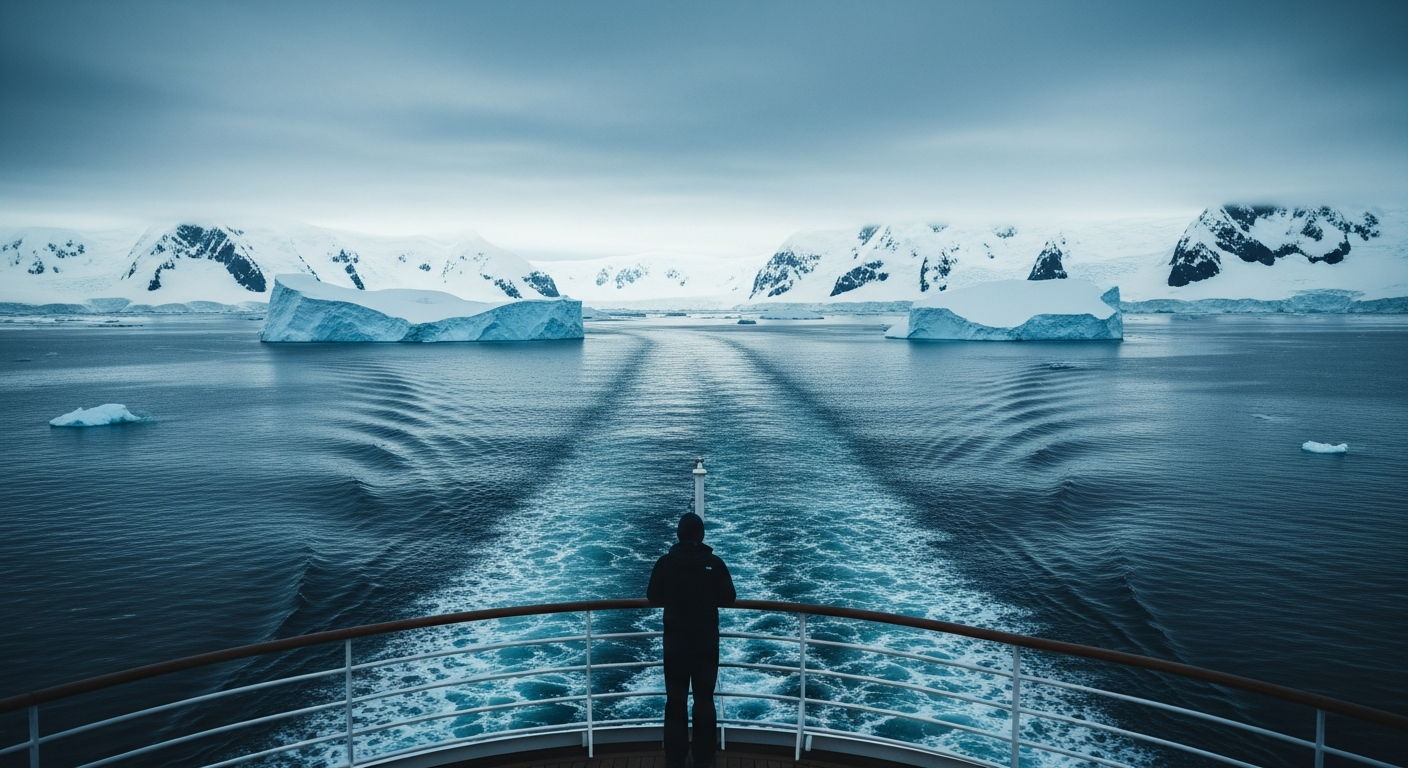
The perception of Antarctic travel has shifted dramatically in recent years. What was once the preserve of hardy researchers and bearded explorers eating tinned pemmican is now accessible to anyone with a reasonable level of fitness and a healthy savings account. But do not let the modern comforts fool you; this is still a hostile, unpredictable environment, and the “holiday” part only happens if you respect the logistics involved.
For the British traveller, the journey is long—usually involving a flight to Buenos Aires or Santiago, and then down to the tip of South America. It is a commitment of time as much as money. The market has become crowded with options, ranging from converted Russian research vessels to six-star boutique hotels that just happen to have an ice-strengthened hull.
The danger lies in assuming that all ships offer the same access. They do not. The strict regulations governing the region mean that your choice of vessel determines whether you will be standing on the ice surrounded by penguins, or merely observing them through binoculars from a distant deck. To help you navigate this complex marketplace, I have stripped back the marketing gloss to look at the practical realities of heading south.
The size of the vessel is everything
If you take only one piece of advice from this article, let it be this: check the passenger capacity before you pay a deposit. The International Association of Antarctica Tour Operators (IAATO) has very specific rules to protect the fragile ecosystem. Crucially, no more than 100 passengers are permitted to land at a specific site at any one time.
If you book a ship carrying 180 people, the operators will rotate you in shifts. Group A goes ashore while Group B cruises in the Zodiacs. It works perfectly well. However, if you book a ship with 500 passengers, your time ashore is drastically reduced. And if you book a ship with over 500 passengers, you cannot land at all. You will be restricted to “scenic cruising” only. For most people, travelling all that way to stay on the ship is a false economy.
The Drake Passage: the price of admission
For the traditionalist, the sea crossing from Ushuaia to the Antarctic Peninsula is part of the experience. The Drake Passage is infamous for a reason. It can be a “Drake Lake” (calm) or a “Drake Shake” (rough), and you rarely know which one you will get until you are in it.
Modern ships handle this far better than the wooden vessels of the Heroic Age, with stabilisers that do an impressive job. Nevertheless, if you are prone to motion sickness, you need to be prepared. The crossing takes roughly two days each way. It is a time for lectures, birdwatching (the albatrosses are spectacular), and mentally preparing for the isolation ahead.
The South Georgia detour
For many British travellers, the peninsula alone is not enough. There is a strong pull to include South Georgia in the itinerary. This remote island is the resting place of Sir Ernest Shackleton and offers wildlife density that actually surpasses Antarctica itself. We are talking about beaches covered with hundreds of thousands of King Penguins and Elephant Seals.
Adding South Georgia usually extends the trip to three weeks and significantly increases the cost, but it is widely considered the jewel in the crown of the Southern Ocean. It is wild, raw, and steeped in history. If you can afford the extra time and expense, it is arguably more impressive than the continent itself.
Expedition vs. Luxury
The line between “expedition” and “luxury” has blurred. You can now find ships that carry helicopters and submarines, alongside fine dining restaurants. Companies like Swan Hellenic Antarctic cruises cater to those who want the adventure without sacrificing the comforts of a five-star hotel.
However, there is a charm to the more traditional expedition ships—vessels like those operated by Hurtigruten or the smaller ships used by Noble Caledonia. These tend to focus less on the thread count of the sheets and more on the mud, the ice, and the science. The “boot room” becomes the social hub of the ship. The atmosphere is collegiate, filled with people who are there to learn rather than to be pampered.
The fly-cruise alternative
A relatively new development is the option to fly over the Drake Passage, landing directly on King George Island to meet your ship. This saves four days of sailing and avoids the rough seas entirely.
It sounds perfect, but it comes with a caveat: the weather. Fog in the South Shetlands can ground flights for days. If you choose this option, you must have patience and travel insurance that covers significant delays. It removes the physical toll of the crossing, but it adds a layer of uncertainty to the schedule.
IN SUMMARY
To summarise the key considerations for your planning:
- strictly adhere to the “under 200 passengers” rule if your priority is maximum time ashore;
- consider a voyage that includes South Georgia if you are interested in Shackleton’s history and vast King Penguin colonies;
- be realistic about your tolerance for rough seas when deciding between sailing the Drake Passage or flying over it;
- ensure you have adequate medical evacuation insurance, as you will be thousands of miles from the nearest hospital;
- pack layers rather than bulk; the temperature is often hovering just around freezing, which is surprisingly manageable with the right gear.
Further reading and useful resources
For reliable, non-commercial information regarding Antarctic travel, consult these sources:
- British Antarctic Survey (BAS): The UK’s national polar research institute, offering incredible background on the science and geography of the region;
- UK Antarctic Heritage Trust: An excellent resource for understanding the historic huts and the preservation of British history in the region.

Susana is a creative writer at The Internet Chicks, covering everything from technology and business to celebrity biographies, net worth, lifestyle, and sports. She loves turning facts into stories that inform, inspire, and entertain readers.