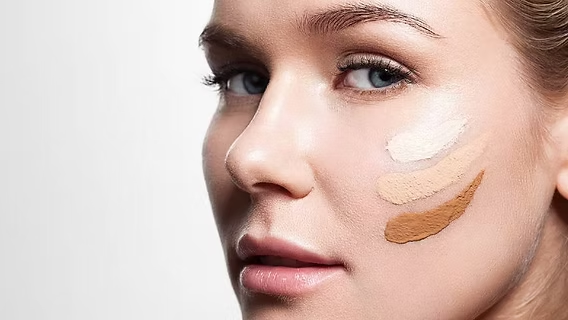
Makeup has long been a powerful form of self-expression, allowing individuals to enhance their features while reflecting personal style. However, finding makeup that truly complements your complexion requires more than following trends. Skin tone, undertone, lighting, and product formulation all play a role in how makeup appears once applied. Understanding these elements creates a more refined and balanced look.
Choosing the right shades is especially important for occasions where makeup must perform under different lighting conditions, such as events, photography sessions, or weddings. When makeup aligns with your natural complexion, it enhances rather than conceals your features, creating a polished and cohesive appearance that looks effortless.
For clients preparing for weddings or formal ceremonies, professional services such as bridal makeup DC focus heavily on precise shade matching to ensure the complexion appears seamless in person and photographs beautifully under both natural and artificial lighting. This attention to tone accuracy helps maintain consistency throughout long events.
Understanding how makeup interacts with your skin tone lays the foundation for selecting products that blend naturally and maintain their integrity throughout the day.
What Is Skin Tone and Why It Matters in Makeup
Skin tone refers to the surface color of your skin, ranging from fair to deep. Makeup interacts with this visible tone, and when shades are chosen in harmony with it, products enhance rather than mask your natural beauty. The importance of accurate shade selection goes beyond aesthetics: it affects how foundation blends into your skin, how blush appears on your cheeks, and the overall balance of color across your face.
In commercial beauty, skin tones are often categorized broadly — fair, light, medium, tan, deep — but this surface classification is only part of the picture. Two people may both be labeled “medium,” yet look markedly different in various lighting or against different makeup shades. That’s because skin tone works in tandem with undertones, which play a critical role in how a makeup shade looks once applied.
Understanding your skin tone provides the canvas, but knowing your undertone reveals the pigments that will work most naturally with your complexion. Overlooking this interplay can lead to foundation that appears ashy or too orange, blush that clashes with your natural warmth or coolness, and highlighters that look too stark.
Understanding Undertones: Cool, Warm, and Neutral
Undertone refers to the subtle hue beneath the skin’s surface. Unlike skin tone — which changes with sun exposure and season — undertone is stable and inherent. There are three primary undertone categories:
- Cool undertones, which tend to have blue, pink, or rosy hues beneath the skin.
- Warm undertones, with golden, peachy, or yellow hues.
- Neutral undertones, which blend characteristics of both cool and warm.
Determining your undertone is foundational because it influences how products like foundation, concealer, and even eyeshadow shades react in natural and artificial light. Professional makeup artists often assess undertones before anything else for precisely this reason.
A common misconception is that skin tone and undertone are the same; they are related, but not interchangeable. For example, someone with a deep skin tone may have a cool or warm undertone, and this difference changes which makeup shades will flatter that individual most..
The Importance of Undertones in Shade Matching
Undertones are the subtle hues beneath the skin’s surface that influence how makeup appears once applied. These undertones typically fall into three categories: cool, warm, and neutral. Unlike skin tone, undertones remain consistent throughout life.
Cool undertones often carry pink, red, or blue hues, while warm undertones lean toward yellow, peach, or golden shades. Neutral undertones balance elements of both. Recognizing undertones helps prevent common makeup issues such as foundations appearing too orange, ashy, or dull.
Choosing Foundation Shades for Different Skin Tones
Foundation is often the first product people think of when matching makeup to skin tone, and for good reason. It sets the base for all other products and must harmonize with both surface tone and undertone. Foundations are available in a multitude of shades and undertone categories, and many brands now offer extended ranges that help bridge the gaps once common in beauty aisles.
For fair skin with cool undertones, foundations with a slight pink or neutral base work well to maintain brightness without appearing chalky. Those with fair to light warm tones often find a subtle yellow or golden base complements their complexion best. Medium skin tones may range from neutral to warm, and selecting a foundation labeled with corresponding undertones ensures the makeup looks seamless rather than muddy.
Deeper skin tones require foundations that not only match shade depth but also reflect undertone subtleties. Deep cool undertones benefit from foundations with berry or plum influences, while deep warm tones look radiant with products that carry golden or red undertones. Neutral undertones in deeper tones often fall in between and can be more forgiving with shade match.
Professional makeup artists emphasize checking your foundation match in natural light if possible, and always testing a few shades along the jawline. The line that disappears into your skin without oxidation is often the right one — a technique practiced across photo shoots, bridal work, and editorial sessions.
Concealer, Contour, and Highlight Balance
Concealers should complement the foundation rather than contrast it. When undertones match correctly, concealer blends seamlessly into the skin, providing coverage without drawing attention to itself.
Contour products are designed to create dimension and should replicate natural shadows. The wrong undertone in contour can appear unnatural, while highlights should reflect light in a way that complements the skin’s undertone rather than overpowering it.
Blush, Eyeshadow, and Lip Color Harmony
Color cosmetics bring depth and personality to makeup. Blush tones should mirror the skin’s natural flush, while eyeshadows work best when they align with undertone warmth or coolness. Lip colors complete the look by tying together the overall color story of the face.
When colors harmonize with skin tone and undertone, makeup appears cohesive rather than layered or heavy.
Makeup Appearance Under Different Lighting Conditions
Lighting dramatically affects how makeup appears. Natural daylight shows true color, while indoor lighting can warm or cool the complexion. Flash photography can wash out subtle tones or exaggerate contrast.
Professionals highlighted in “Makeup for Every Skin Tone: Finding the Right Shades for You” by GlambyDuaa understand how undertones react under varying lighting environments and adjust shade selection accordingly. This expertise ensures makeup remains balanced from ceremony to reception, or from daylight to evening events.
Makeup for Events, Photography, and Special Occasions
Event makeup requires durability and color stability. Shade selection must account for long wear, lighting changes, and close-up photography. This is why professional makeup artistry emphasizes undertone accuracy and product compatibility.
Whether for bridal looks, formal events, or media appearances, makeup that respects skin tone creates a timeless and refined result that translates well across all settings.
Makeup that complements every skin tone begins with understanding how surface color and undertones interact with pigments, lighting, and formulation. When these elements align, makeup enhances natural beauty rather than masking it.
By choosing shades that harmonize with your complexion, makeup becomes an extension of your features—balanced, confident, and enduring across every occasion.

Bit Labs Author is a multi-niche digital expert who creates sharp, high-impact content across Tech, Digital Marketing, Business, Law, News, and Lifestyle. Known for blending research with creativity, they transform complex topics into clear, engaging insights that empower readers to learn, grow, and stay ahead in the digital age.