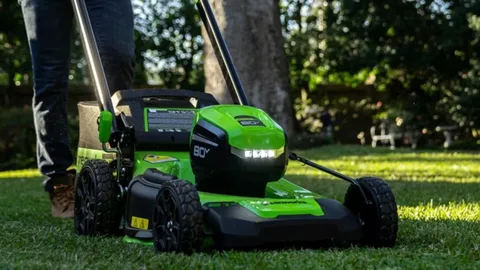
The cordless electric lawn mower has emerged as a compelling answer to this challenge. Combining battery-powered convenience with zero direct emissions, these machines represent a fundamental shift in how we approach yard maintenance. But are they truly the key to eco-friendly lawn care, or just a marginal improvement? This article examines the environmental costs of gas mowers, explores how cordless electric models address those concerns, highlights innovations like those from MOWRATOR and autonomous lawn care robots, and provides practical guidance for making the switch to sustainable mowing.
The Environmental Toll of Traditional Gas-Powered Lawn Mowers
Gas-powered lawn mowers have been a suburban staple for decades, but their environmental footprint is staggeringly disproportionate to their size. These small engines operate without the catalytic converters and emission controls found in modern automobiles, meaning they release a concentrated cocktail of pollutants with every use. Beyond what comes out of the exhaust, gas mowers consume fossil fuels, require regular oil changes that generate hazardous waste, and eventually end up in landfills where their metal and plastic components take decades to decompose. For environmentally conscious homeowners, understanding the full scope of these impacts is the first step toward making a meaningful change in their lawn care routine.

Emissions and Air Quality Impact
The numbers behind gas mower emissions are sobering. According to the Environmental Protection Agency, gas-powered lawn mowers account for roughly five percent of urban air pollution in the United States. A conventional four-stroke mower engine emits significant quantities of carbon dioxide, volatile organic compounds, nitrogen oxides, and carbon monoxide during operation. These pollutants contribute directly to ground-level ozone formation, a primary component of smog that aggravates asthma, damages lung tissue, and harms vulnerable populations including children and the elderly. The environmental toll extends beyond human health as well — nitrogen oxide deposits acidify soil and waterways, disrupting local ecosystems. By contrast, cordless electric mowers produce zero direct emissions at the point of use, eliminating this entire category of pollution from the mowing equation. When charged with electricity from renewable sources, their total lifecycle carbon footprint shrinks even further, making the comparison with gas models increasingly stark.
Noise Pollution and Community Disruption
Gas mowers typically operate at 90 to 100 decibels, a level comparable to a motorcycle or chainsaw and well above the threshold where prolonged exposure causes hearing damage. This noise doesn’t just affect the operator — it radiates through entire neighborhoods, disrupting outdoor activities, disturbing sleep for shift workers, and creating stress for pets and local wildlife. Studies have shown that chronic noise exposure elevates cortisol levels and increases the risk of cardiovascular disease in affected communities. Birds and small mammals are particularly sensitive, as engine noise interferes with mating calls, territorial signals, and predator detection. Many municipalities have responded by enacting noise ordinances that restrict mowing to specific hours, an implicit acknowledgment of the problem. Cordless electric mowers, by comparison, typically produce between 60 and 75 decibels — roughly the volume of a normal conversation — making early morning or evening mowing feasible without disturbing neighbors or driving wildlife from garden habitats.
How Cordless Electric Mowers Enable Eco-Friendly Lawn Maintenance
Cordless electric mowers represent more than just a quieter alternative to gas-powered machines — they fundamentally reimagine lawn care as an activity that can coexist with environmental stewardship. By replacing internal combustion with battery-driven motors, these mowers eliminate the most harmful byproducts of traditional mowing while delivering performance that increasingly rivals their gas-powered predecessors. For homeowners who want a pristine lawn without the environmental guilt, understanding how these machines deliver on their green promise is essential to making an informed switch.
Zero Emissions and Clean Operation
The most immediate environmental advantage of a cordless electric mower is the complete absence of exhaust fumes during operation. There is no tailpipe, no combustion chamber, and no fuel tank — which means no carbon monoxide drifting across your yard, no volatile organic compounds settling on garden beds, and no particulate matter for your family to inhale while enjoying outdoor time. This clean operation is particularly meaningful for the person behind the mower, who with a gas model would be walking directly through a concentrated stream of exhaust for the entire mowing session. Allergists and respiratory specialists have long cautioned that gas mower operators face elevated exposure to benzene and formaldehyde, both known carcinogens. Switching to a cordless electric model eliminates this personal health risk entirely. On a broader scale, if even a fraction of the roughly 54 million Americans who mow their lawns each week transitioned to electric, the cumulative reduction in ground-level pollutants would be substantial enough to measurably improve air quality in urban and suburban corridors.
Energy Efficiency and Renewable Power Integration
Electric motors convert energy to motion far more efficiently than internal combustion engines, which lose a significant portion of their fuel energy as waste heat. This means a cordless mower uses less total energy to accomplish the same mowing task, reducing overall resource consumption regardless of the electricity source. But the real sustainability breakthrough comes when homeowners pair their mowers with renewable energy. Charging a mower battery from rooftop solar panels or through a certified green energy utility plan creates a nearly closed-loop system where lawn maintenance runs entirely on clean power. Even on a standard electrical grid, the centralized generation of power at a utility plant — with its modern emission controls and increasing renewable mix — produces far fewer pollutants per unit of energy than a small, unregulated gas engine operating in your backyard. Battery technology itself has advanced considerably in recent years, with lithium-ion cells offering longer runtimes, faster charging cycles, and improved energy density. Modern batteries also have longer usable lifespans than earlier generations, and growing recycling programs ensure that spent cells can be reclaimed rather than landfilled. Together, these factors make the total lifecycle footprint of a cordless electric mower significantly lighter than that of a gas model, and the gap continues to widen as the electrical grid grows cleaner and battery manufacturing becomes more sustainable.
Innovations in Cordless Mowing: Smart Technology and Lawn Care Robots
The cordless electric mower market has evolved far beyond simple battery-powered versions of traditional push mowers. Today’s most advanced models incorporate intelligent systems that optimize every aspect of the mowing process, from blade speed modulation to navigation algorithms that ensure complete coverage with minimal energy expenditure. These innovations don’t just improve the user experience — they actively enhance the environmental credentials of electric mowing by squeezing more performance from every watt of stored energy. For eco-conscious homeowners who want cutting-edge sustainability, two developments stand out as particularly transformative: smart power management systems, such as those developed by brands like MOWRATOR, and autonomous lawn care robots.
Understanding Smart Power Management for Optimal Performance
Smart power management technology represents a significant leap in how cordless mowers handle power delivery and cutting efficiency. Rather than running the motor at a constant speed regardless of conditions, advanced machines use sensors to detect grass density, height, and moisture content in real time, then adjust blade rotation speed and torque accordingly. When the mower passes over thin or already-short grass, it automatically reduces power consumption, preserving battery life for the sections that genuinely need full cutting force. This intelligent power management means less energy wasted on unnecessary blade rotation, which translates directly into longer runtime per charge and fewer charging cycles over a mowing season. The cumulative effect is meaningful — homeowners report completing larger areas on a single battery while the motor experiences less wear, extending the machine’s operational lifespan. A longer-lasting mower means fewer units manufactured, shipped, and eventually recycled or discarded, compounding the environmental benefit beyond simple energy savings during use.
The Role of Lawn Care Robots in Automated Sustainable Care
Robotic mowers take the eco-friendly potential of cordless electric technology even further by fundamentally changing when and how grass gets cut. These autonomous machines operate on a continuous or near-daily schedule, trimming tiny amounts of growth each pass rather than waiting for grass to grow tall and then removing large volumes at once. This approach — sometimes called “little and often” mowing — requires dramatically less energy per session because the blades encounter minimal resistance. The fine clippings left behind decompose rapidly, returning nitrogen and moisture to the soil and reducing or eliminating the need for synthetic fertilizers. Robotic mowers navigate using boundary wires, GPS mapping, or vision-based systems to cover every inch of lawn methodically, avoiding redundant passes that waste battery power. Their whisper-quiet operation, often below 60 decibels, means they can work during early morning hours or late evenings without any community disruption. Because they maintain grass at a consistent height, lawns develop denser root systems that naturally resist weeds and retain moisture more effectively, further reducing the need for chemical interventions. For homeowners seeking a truly hands-free approach to sustainable lawn care, robotic mowers deliver precision maintenance with the smallest possible environmental footprint.
Adopting User-Friendly Mowing: Practical Steps for Sustainable Lawn Care
Making the transition from gas to cordless electric mowing doesn’t require a complete overhaul of your lawn care routine — it simply demands a bit of informed decision-making upfront and a few adjusted habits going forward. The good news is that modern cordless mowers are designed with accessibility in mind, featuring intuitive controls, lightweight construction, and minimal setup requirements that make them approachable even for those who have relied on gas models for years. By selecting the right machine for your specific situation and maintaining it properly, you can maximize both its environmental benefits and its operational lifespan, ensuring your investment pays dividends for your lawn and the planet alike.
Choosing the Right Cordless Electric Mower for Your Needs
Start by honestly assessing your lawn’s size, terrain, and grass type, as these factors determine the battery capacity and cutting width you’ll need. For small to medium lawns under a quarter acre, a single battery with moderate amp-hour rating will typically provide sufficient runtime to finish in one session. Larger properties benefit from models offering dual-battery systems or higher-capacity cells that deliver extended operation without interruption. Cutting width matters for efficiency — a wider deck covers more ground per pass but demands more power, so balance coverage against battery drain based on your specific acreage. Look for mowers with adjustable cutting heights, since maintaining grass at the optimal length for your species promotes root health and natural weed suppression. Durability is another critical consideration; steel decks withstand impacts better than plastic but add weight, so consider your physical comfort during extended mowing sessions. Check for eco-certifications and manufacturer commitments to sustainable production, including recyclable packaging and take-back programs for spent batteries. If your property has slopes or uneven terrain, self-propelled models reduce physical effort while maintaining consistent cutting quality across challenging areas.
Maintenance and Best Practices for Eco-Friendly Equipment
Proper battery care is the single most impactful thing you can do to extend your mower’s useful life and minimize waste. Store batteries in a cool, dry location away from temperature extremes, and avoid letting them fully discharge before recharging — most lithium-ion cells perform best when kept between twenty and eighty percent capacity during storage. Sharpen blades at least twice per mowing season, because dull blades tear grass rather than cutting it cleanly, stressing the lawn and forcing the motor to work harder, which drains the battery faster. Clean the underside of the deck after each use to prevent grass buildup that creates drag and reduces airflow efficiency. When batteries eventually reach end of life after several years of service, never discard them in household trash — return them to manufacturer recycling programs or certified e-waste facilities where valuable materials like lithium, cobalt, and nickel can be recovered and reused. Complement your electric mowing with sustainable practices such as grasscycling, where clippings remain on the lawn to decompose naturally, and adjusting your mowing schedule to avoid cutting during drought stress. These combined habits ensure your equipment operates at peak eco-efficiency throughout its entire lifespan.
Why Cordless Electric Mowers Are the Future of Sustainable Lawn Care
The evidence is clear: cordless electric mowers represent one of the most impactful changes an individual homeowner can make toward genuinely sustainable lawn care. By eliminating direct emissions, slashing noise pollution, and operating with far greater energy efficiency than gas-powered alternatives, these machines address the most pressing environmental shortcomings of traditional mowing in a single switch. Advanced technologies from innovative brands and autonomous lawn care robots push the benefits even further, optimizing every watt of energy while maintaining lawns with precision that actually improves soil health and reduces chemical dependency.
For environmentally conscious consumers, the question posed in this article has a straightforward answer — yes, cordless electric mowers are a key tool for eco-friendly lawn care, though they work best as part of a broader commitment that includes renewable energy charging, responsible battery recycling, and sustainable mowing practices like grasscycling. The technology has matured to the point where performance trade-offs are minimal and shrinking with each generation. If you’ve been waiting for the right moment to retire your gas mower, that moment has arrived. A greener, quieter, healthier garden — and community — is one charge away.