The Critical Challenges of Slope Mowing for Landscapers
Mowing on inclines beyond 15 degrees introduces a cascade of risks that flat-terrain operations never encounter. Rollover accidents remain the most severe threat—traditional ride-on mowers can lose traction or tip without warning when gravity shifts the center of mass mid-turn. Walk-behind alternatives keep operators on foot, but prolonged work on steep grades leads to muscle fatigue, twisted ankles, and heat exhaustion, all of which spike workers’ compensation claims. Beyond safety, the time penalty is substantial. Crews often slow to half their normal pace on slopes, doubling labor hours for the same square footage. Uneven surfaces compound the problem: ruts, exposed roots, and erosion channels force constant speed adjustments and multiple passes to achieve an acceptable cut. Erosion control adds another layer of complexity, since aggressive mowing patterns can strip vulnerable topsoil and destabilize embankments that municipalities or DOTs need intact. The cumulative effect on a landscaping business is punishing—higher payroll costs, increased equipment wear, and scheduling delays that ripple across every contract. These compounding inefficiencies make it clear that manual methods have reached their practical ceiling on challenging terrain, creating urgent demand for technology that can maintain productivity without compromising crew safety.

Remote Operated Lawn Mowers: Revolutionizing Slope Mower Technology
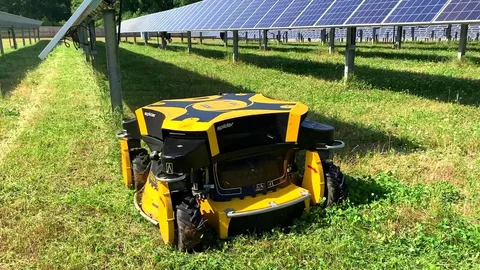
A remote operated lawn mower places the operator at a safe distance—typically 100 to 500 meters away—while the machine navigates grades that would be hazardous or impossible for conventional equipment. Using handheld transmitters or tablet-based interfaces, landscapers guide these machines across embankments with precision that rivals GPS-guided tractors. The core advantage is immediate: no human body on the slope means zero rollover injuries and no fatigue-driven mistakes. But the benefits extend well beyond safety. Modern slope mower technology incorporates low-center-of-gravity chassis designs, aggressive rubber tracks or spiked wheels that grip loose soil, and independent suspension systems that maintain blade-to-ground contact on irregular terrain. Obstacle avoidance sensors detect rocks, fence posts, and drainage grates in real time, automatically adjusting the cutting path rather than relying on operator reflexes. Precision control allows single-pass mowing on contours that previously required three or four overlapping runs, slashing time on site. For landscapers managing crews across multiple properties, this translates into tighter schedules and the ability to bid on steep-terrain contracts that competitors avoid. The physical toll on workers drops dramatically—operators stand on level ground, managing the machine with minimal exertion, which reduces turnover and keeps experienced staff on payroll longer.
Types and Models of Remote Controlled Mowers
The market segments broadly into tracked units designed for extreme slopes above 35 degrees and wheeled models suited to moderate inclines between 15 and 35 degrees. Tracked machines distribute weight over a larger surface area, minimizing turf damage and maximizing grip on wet or sandy hillsides. Wheeled variants are lighter, easier to transport between job sites, and better suited to manicured turf where track marks are unacceptable. Brands like MOWRATOR have contributed to advancing this category by focusing on robust build quality and practical power tool engineering suited to demanding outdoor conditions. Control range, cutting width, and battery capacity vary significantly across platforms, so landscapers should match machine specifications to their most demanding site profile—factoring in slope angle, grass density, and daily acreage targets—before committing to a purchase.
Advanced Battery Systems: Core to Efficiency and Battery Longevity
The shift from lead-acid to high-density lithium-ion cells has fundamentally changed what remote operated lawn mowers can accomplish on a single charge. Early battery-powered slope mowers struggled to deliver more than 45 minutes of continuous cutting before requiring hours of downtime, making them impractical for commercial operations. Today’s advanced lithium-ion packs—particularly those using lithium iron phosphate (LiFePO4) chemistry—push continuous runtimes well past two hours while tolerating the deep discharge cycles that slope work demands. Energy density improvements mean these packs store more power per kilogram, keeping machine weight low enough to prevent excessive soil compaction on fragile embankments.
Equally important is the smart battery management system (BMS) embedded in modern packs. A well-engineered BMS monitors individual cell voltages, temperatures, and current draw in real time, balancing loads across the pack to prevent hotspots that accelerate degradation. This cell-level oversight directly extends battery longevity—operators can expect 1,500 to 3,000 full charge cycles before capacity drops below 80 percent, compared to roughly 500 cycles with older chemistries. For a landscaping crew running a mower five days a week through a seven-month season, that translates into multiple years of reliable service before a replacement pack is needed. Environmental resilience matters too: advanced cells maintain stable output in temperatures ranging from near freezing to over 40°C, so performance doesn’t crater during early spring cleanups or midsummer highway contracts. Faster charging protocols, some capable of restoring 80 percent capacity in under an hour, minimize midday downtime and let crews rotate a single spare pack across multiple machines instead of idling equipment.
Optimizing Battery Performance for Slope Terrain
Slopes impose higher current draw because motors work harder against gravity, so proactive power management is essential. Start by selecting an eco or slope-specific mode if the mower’s firmware offers one—these profiles cap blade RPM during ascents and recapture energy on descents through regenerative braking, smoothing out demand spikes that shorten cycle life. Mow across the slope rather than straight up and down whenever terrain allows; lateral passes reduce the sustained high-torque loads that drain cells fastest. Between shifts, store batteries in a cool, shaded area and avoid charging a pack that’s still hot from operation—letting it cool to ambient temperature first prevents thermal stress on cell chemistry. Inspect connector terminals monthly for corrosion or grass debris buildup, since even minor resistance at the contacts generates heat and wastes energy. If you notice runtime dropping noticeably before the pack’s expected cycle count, run a full discharge-and-recharge calibration to reset the BMS gauge, which often recovers reported capacity lost to sensor drift rather than actual cell wear.
Integrating AI Lawn Care for Smart Mowing Solutions
Artificial intelligence is adding a decisive layer of capability to remote operated lawn mowers, turning them from remotely guided tools into semi-autonomous platforms that think ahead. AI lawn care systems use onboard sensors, GPS mapping, and machine learning algorithms to build a detailed digital model of each property after the first pass. On subsequent visits, the mower references that model to plan the most efficient cutting path—factoring in slope angle, grass growth patterns, and obstacle locations—without requiring the operator to manually steer every contour. This autonomous path planning is especially valuable on complex hillsides where overlapping passes waste both time and battery capacity. By calculating the shortest route that covers every square meter, AI-driven mowers can reduce energy consumption by up to 30 percent compared to manual control on the same terrain.
Real-time adjustments push efficiency further. If sensors detect thicker grass on a shaded north-facing slope, the system automatically increases blade speed while slowing ground travel, ensuring a clean cut without bogging down the motor and spiking current draw. Conversely, on sparse or dormant patches, blade RPM drops to conserve power. Predictive maintenance is another game-changer for landscaping fleets. AI lawn care platforms aggregate data from motor load, battery temperature trends, and vibration signatures to flag components approaching failure before they strand a machine mid-job. Fleet managers receive dashboard alerts recommending bearing replacements or BMS recalibrations weeks in advance, converting unplanned breakdowns into scheduled service that fits neatly between contracts. The data analytics loop also benchmarks performance across sites, revealing which properties consume the most energy per acre so crews can adjust mowing frequency or blade height to balance turf health with operational cost.
Practical Implementation: Steps and Solutions for Landscapers
Transitioning to remote operated lawn mowers with advanced battery systems doesn’t require overhauling your entire operation overnight. A phased approach lets you validate the technology on your most problematic sites before scaling across your full portfolio. Start with a cost-benefit analysis that compares your current slope mowing expenses—labor hours, insurance premiums, equipment repair, and lost-bid revenue on steep contracts—against the total cost of ownership for a remote unit over three to five years. Most landscaping businesses recoup their investment within 18 months once reduced labor, fewer injury claims, and faster job completion are factored in. Next, involve your crew early. Operators who understand the “why” behind the switch adopt new workflows faster and contribute practical insights during the selection process, such as which sites cause the most downtime or which slopes eat through fuel budgets. When integrating a remote mower into daily scheduling, designate it as the lead machine on slope-heavy routes and reassign freed-up crew members to detail work or additional properties, effectively expanding your daily capacity without adding headcount. Track energy consumption and mowing time per acre during the first season to build a performance baseline, then use that data to fine-tune mowing frequency, blade height, and battery rotation schedules for each property.
Step-by-Step Guide to Deployment and Maintenance
Begin by surveying every slope in your service area, recording grade angles, soil types, and obstacle density so you can match terrain demands to machine capabilities. Select a remote mower whose battery chemistry and runtime comfortably exceed your longest single-site requirement—building in a 20 percent buffer prevents mid-job interruptions. Conduct hands-on training sessions where each operator practices on a moderate slope before advancing to steeper terrain, covering emergency stop procedures, signal-loss protocols, and efficient mowing patterns. Establish a weekly maintenance checklist that includes inspecting blade condition, cleaning track or wheel assemblies, verifying BMS readouts for cell balance, and testing remote signal strength at maximum operating distance. After every 50 hours of operation, perform a full battery calibration cycle and review AI-generated performance reports to identify emerging issues like rising motor temperatures or declining energy efficiency per acre. Adjust your deployment strategy each season based on accumulated data, reallocating machines to the routes where they deliver the greatest time and cost savings.
Building a Competitive Edge with Battery-Powered Slope Mowing
Advanced battery systems have become the linchpin that makes remote operated lawn mower technology viable for commercial slope mowing. The combination of high-density lithium-ion chemistry, intelligent battery management, and extended cycle life directly addresses the runtime and reliability gaps that once kept landscapers tethered to dangerous manual methods. When paired with slope mower technology—low-center-of-gravity designs, aggressive traction systems, and precision remote control—these power systems eliminate rollover risks, slash labor hours, and open revenue streams on steep-terrain contracts that competitors still avoid. Layer in AI lawn care capabilities like autonomous path planning, adaptive blade control, and predictive maintenance alerts, and the result is a platform that grows smarter and more efficient with every mowing session. For landscaping professionals, the path forward is clear: assess your most challenging slopes, invest in equipment built around proven battery longevity, train your crews to leverage data-driven workflows, and scale methodically as performance data confirms the returns. The industry is moving decisively toward autonomous, battery-powered solutions—early adopters who act now will lock in competitive advantages in safety, efficiency, and profitability that compound with each season.